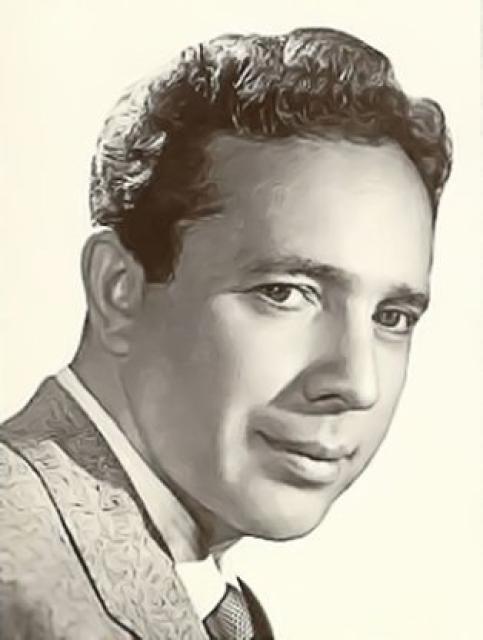
Igor Gorin
 USA
USABiography of Igor Gorin
Igor Gorin, an opera singer (baritone), first came to the United States in 1930 not as an opera singer, but as a cantor invited by a synagogue in Providence, Rhode Island. The rabbi of the synagogue, Jacob Zonderling, heard Gorin sing in Vienna and was so impressed that he invited him to sing the Sabbath service and several concerts. Gorin was born Ignatz Greenberg in a Jewish family in the small Galician town of Grodek. His father, Shulim Greenberg, was a rabbi and a Talmud scholar who taught Jews in Grodek and the surrounding villages. His mother, Enta Moritz Greenberg, instilled in him a love for music. After his mother's death, his aunt raised him. Gorin had a younger brother, Ephraim, and a sister, Blima. He studied in a yeshiva, where his father sent him. He excelled in the study of Jewish worship and Hebrew and learned eight foreign languages. He combined his studies with singing in the choir of the local synagogue.
Early Life and Career
Due to the difficult socio-political situation in the country and the increasing Jewish pogroms, the Greenberg family moved illegally to the capital of Austria in 1919 when Ignatz was 15 years old. In Vienna, the family also faced various hardships. Ignatz worked in several professions: at a metallurgical plant, as a tailor's assistant, and as a milk deliveryman, working 6-8 hours a day with only one day off a week. Despite the lack of free time, Ignatz often visited the public library and attended the free evening school. On Sundays, he went to the cinema and developed a love for Westerns, cowboys, and the cinematic portrayal of America.
At an audition for the synagogue choir, his singing caught the attention of Viktor Fuchs, one of the most renowned vocal instructors in Vienna at the time, who recognized the young man's exceptional talent and irresistible love for singing. In 1925, Fuchs offered Ignatz free lessons with Robert Tranewsky, one of his assistants.
The demanding studies and work undermined Ignatz's health. After a sudden fainting spell, he was diagnosed with acute tuberculosis, which could have resulted in serious complications for an illegal immigrant. Thanks to the assistance and sponsorship of Viktor Fuchs, Ignatz avoided deportation and underwent a course of treatment at mineral springs in Bad Gleichenberg. Upon his return to Vienna, he was declared healthy by doctors. Fuchs arranged for Greenberg to enter the Vienna Academy of Music, where he studied piano, music theory, and vocal training from 1926 to 1929. It was here that he had the opportunity to hear many great singers of the time. His idol became Mattia Battistini, whom he was able to see in concert shortly before the "king of baritones" died. Determined to reach the same level, Greenberg focused all his efforts on mastering the bel canto style. However, at that time, his vocal practice was limited to singing in local synagogues, Jewish weddings, and funerals.
Ignatz became the chief cantor of the synagogue on Leopoldstrasse in Vienna, gradually gaining fame throughout the city. One of the familiar rabbis arranged his operatic debut in a Swiss production of "Turandot" in the role of the counselor Ping. Later, Ignatz became a member of the Czech Opera Company, where his repertoire included the roles of Tonio, Germon, Figaro, Rigoletto, Renato, Wolfram, Escamillo, and Valentin.
Move to the United States
A pivotal moment came when he met the great Wagnerian baritone Hans Hermann Nissen, who held auditions to find young talents. Nissen's agent, Gunter Gunbrau, advised Ignatz to take the stage name "Igor Gorin" to facilitate his path to international recognition.
In 1930, Gorin, under his new name, found himself at the Teplitz-Schonau Opera, which also gave him the right and opportunity to perform at the Vienna State Opera.
Gorin first came to the United States in 1930 not as an opera singer but as a cantor invited by a synagogue in Providence, Rhode Island. Rabbi Jacob Zonderling, the rabbi of the synagogue, heard Gorin sing in Vienna and was so impressed that he invited him to sing the Sabbath service and several concerts.
His second trip took place in 1931. Gorin was concerned about the anti-Semitic sentiment in Germany and the growing popularity of Hitler. In 1933, when Hitler came to power, Gorin attempted to obtain a visa to the United States for himself and his family. However, since his relatives were still in an illegal status, he was only able to obtain a visa for himself and left alone.
In the United States, Gorin stayed with Zonderling. At a formal dinner at the rabbi's house, Gorin gave an impromptu concert. One of the guests, David Bandler, a successful businessman and owner of a furniture factory, immediately decided to become his manager and pass on his former business to his son.
Bandler used his connections with the management of the Radio City Music Hall in New York, where Gorin's American career began. He was listed on the billboards as the "Viennese baritone Charles Gorin." Later, a 10-week contract was signed with the NBC radio broadcasting company for his participation in the program "The Standard Hour." During these broadcasts, Gorin met composer Albert Haye Malotte, which allowed him to become the first singer to perform Malotte's famous composition "The Lord's Prayer." The composition and the recording made in 1940 gained significant popularity.
Gorin consistently developed his participation in radio programs such as Hollywood Hotel, Kraft Music Hall, Great Moments in Music, Ford Sunday Evening Hour, International Harvester, and RCA Victor Hour.
In 1936, the singer signed his first contract with RCA and recorded his first record in 1937. He also played the role of the Greek hairdresser, Nicky Papalucas, in the film "Broadway Melody of 1938," performing the toreador song and part of Figaro's aria from "The Barber of Seville."
In May 1939, Gorin married radio actress Mary Smith, and in July, he obtained US citizenship. The couple lived in New York and usually spent their vacations in the Emerald Valley, where Gorin passionately pursued horseback riding, bringing his childhood dreams of cowboys and the Wild West to life. During this time, he persistently and unsuccessfully tried to bring his family from Austria to the United States. He was only able to save his first vocal teacher, Victor Fuchs, who quickly gained recognition in the US and opened his own school. In 1945, Gorin learned that his brother and sister had survived, but his father and uncle had perished in concentration camps.
Despite an unsuccessful audition at the Metropolitan Opera, Gorin's career was on the rise by the end of the 1930s. He occasionally performed in various opera houses throughout the United States, but mainly sang on radio and television, gave concerts, and composed music.
By the mid-1940s, Igor Gorin regularly appeared on shows such as Voice of Firestone and Bell Telephone Hour.
American music critics unanimously praised his impeccable phrasing, diction, breath control, wide range, and beautiful voice, which aligned him with his idol, Battistini, whose conscious imitator he remained.
From his late video recordings, Gorin's performances as Rigoletto in the NBC Opera Theatre program (one of the world's first live television broadcasts from an opera house in 1958) and as Germon in an NBC program in 1960 stand out.
On October 12, 1962, Gorin performed the role of Prince Igor on the stage of the Lyric Opera in Chicago.
On February 10, 1964, Gorin made his debut at the Metropolitan Opera in the role of Germon in Verdi's opera "La Traviata." Despite signing a contract with the theater, this first performance turned out to be his last, which Gorin attributed to hidden intrigues.
In the same year, he traveled to Europe to participate in a television production of "The Merry Wives of Windsor" by Nicolai, featuring many stars of European opera at the time.
After returning to the United States, Gorin began to experience serious health problems: his right eye was removed due to glaucoma, and he suffered from recurring asthma attacks. Doctors recommended that he move to a drier climate.
In 1966, Igor Gorin retired from the stage due to his health and moved with his wife to the southern United States, becoming a professor of music at the University of Arizona in Tucson.
Simultaneously, he served as a cantor leading the Sabbath worship services in a local synagogue every Saturday.
By the end of the 1970s, his melanoma on his leg worsened, but he ignored it for a long time, which led to his withdrawal from his career.
On March 24, 1982, at the age of 77, Igor Gorin died in severe pain from cancer, surrounded by his wife, Mary, and close friend David Fillman.


