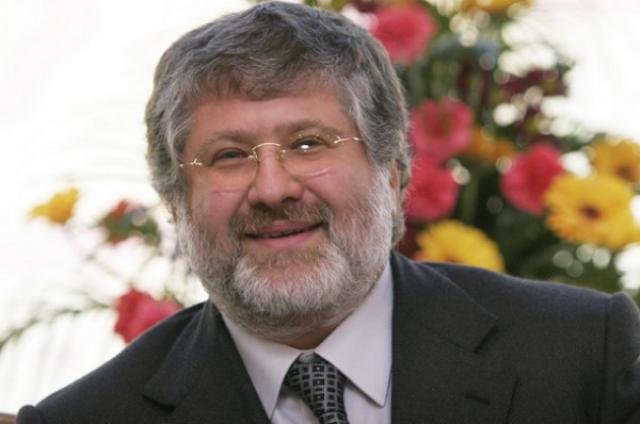
Igor Kolomoyskiy
 Ukraine
- Biography of Igor Kolomoisky
- Early Life and Education
- Entrepreneurial Journey
- Entry into Politics and Business Expansion
- Political Influences and Business Deals
- Governor of Dnipropetrovsk Oblast and Political Controversies
- Recent Ventures and Conclusion
Biography of Igor Kolomoisky
Igor Valeriyovich Kolomoisky is a Ukrainian oligarch, entrepreneur, and public figure. Born on February 13, 1963, in the industrial city of Dnipro, he is considered one of the wealthiest individuals in Ukraine, ranking second in 2013. Kolomoisky is also recognized as one of the most influential figures in Ukrainian politics.
Early Life and Education
Kolomoisky grew up in Dnipro, the son of engineer parents. He excelled academically at School No. 21 in Dnipro, participating in mathematics Olympiads and receiving the "For Excellent Study" badge from the Central Committee of the Leninist Communist Youth Union. He was also involved in various sports, including football, hockey, and chess, earning his first sports ranking. In 1980, Kolomoisky enrolled in the prestigious Dnipro Metallurgical Institute, studying automation of metallurgical production and preparing to continue his family's engineering profession.
Entrepreneurial Journey
However, as societal attitudes changed and commercial activities ceased to be labeled non-labor income, Kolomoisky, who had already started a family, began earning money. His first business venture involved traveling to rural areas and offering artistic photo portraits based on any image. From each three or five ruble order, he kept one ruble, and as a result, a single trip to a large village exceeded his engineering salary. In 1985, Kolomoisky joined the cooperative "Fianit" with his friends, an international trading enterprise with Moscow management, and began trading in new office equipment such as faxes, telephones, and computers. After purchasing computers in Singapore and vacationing on Sentosa Island, the group of young individuals decided to establish their own cooperative, naming it after the island they admired.
Entry into Politics and Business Expansion
During the August 1991 coup, which caught the cooperators in Crimea, they managed to transport all their ruble cash to the capital and exchange it for dollars just as armored vehicles approached. If before that year, the founders of "Sentosa" seriously considered doing business in Moscow, any doubts disappeared after that incident. In addition to electronics, they began trading in scarce clothing and footwear, realizing that there were more profitable opportunities. Kolomoisky expanded his business into trading metals, ore, and oil.
The establishment of "PrivatBank" came at the request of the then regional "owner," Serhiy Tihipko, who became its chairman. The bank's advantage was its efficiency and focus on working with private entrepreneurs. It prospered through voucher privatization, which began in 1995, with "Privat" acquiring 2.3% of the total number of vouchers. This allowed them to purchase significant stakes in metallurgical plants that technically remained state-owned, although they had to "share" part of the capital with the well-known Pavlo Lazarenko. Naturally, such an industrial and financial giant could not stay away from politics, although its founders aimed for indirect rather than direct political influence.
Political Influences and Business Deals
By 2003, "Privat" owned 40% of the capital of "Ukrnafta," but under the influence of the Surkis brothers and Viktor Medvedchuk, control of the state's stake was entrusted to one of Kolomoisky's supporters, Palitsa. The extensive list of "Privat's" acquisitions of other structures is far from complete and continues to this day. The most high-profile case was the division of powers in the management of the Nikopol Ferroalloy Plant, where Kolomoisky's rival was Pinchuk, the son-in-law of Leonid Kuchma. After Pinchuk purchased a controlling stake in the enterprise against a preliminary agreement, Kolomoisky initiated a war of compromising materials. During this time, "Privat" also clashed with Rinat Akhmetov over the Central Mining and Processing Plant.
In 2006, after Viktor Yushchenko came to power, Pinchuk exchanged part of his shares in "Ukrnafta" for a stake in "Privat." However, Kolomoisky faced charges of organizing an attack on lawyer Karpenko, which he publicly declared to be a setup. During his residency in Switzerland, Kolomoisky's interests in Ukraine were represented by Hennadiy Korban. Despite his efforts, "Privat" could not overcome Akhmetov's influence. However, they emerged victorious in the battle for the Dnipro market against "Ozerka," with their opponent, Maxim Kurochkin, being arrested and subsequently killed under suspicious circumstances.
Governor of Dnipropetrovsk Oblast and Political Controversies
In March 2014, after changes in the leadership of the southern and eastern regions of Ukraine, Kolomoisky returned from abroad and assumed the position of governor of his native Dnipropetrovsk Oblast. He decisively suppressed the separatist movement in the region, organized and financed the "National Defense Battalion," supported other volunteer associations, and proposed the nationalization of the assets of oligarchs who declared their intent to secede from Ukraine. Kolomoisky's public service ended on March 24, 2015, following a conflict related to changing the management of "Ukrnafta." Commenting on his resignation, he stated that if he were in President Poroshenko's place, he would have fired himself three times already, and there could be no talk of any confrontation between them.
Recent Ventures and Conclusion
As indirect confirmation of their continued rapport, "PrivatBank" received sums from the stabilization fund, control over the state's stake in the Zaporizhzhia Titanium-Magnesium Combine was transferred to them, and rumors circulated about Kolomoisky's acquisition of the bankrupt Delta Bank. Kolomoisky is often described as very passionate, impulsive, extravagant, and cynical, but also as a highly industrious individual. He has a tendency to express his emotions openly, such as loudly cursing during a meeting with the powerful Tihipko or offering a persistent journalist to have coffee together. Regarding his possession of Ukrainian, Israeli, and Cypriot citizenship, he argues that the law prohibits dual citizenship, not triple citizenship. His unofficial nickname, "Benya," is associated with his resemblance to a character from Babel's works. Additionally, after fierce battles with opponents, Kolomoisky often became their companion in subsequent endeavors.