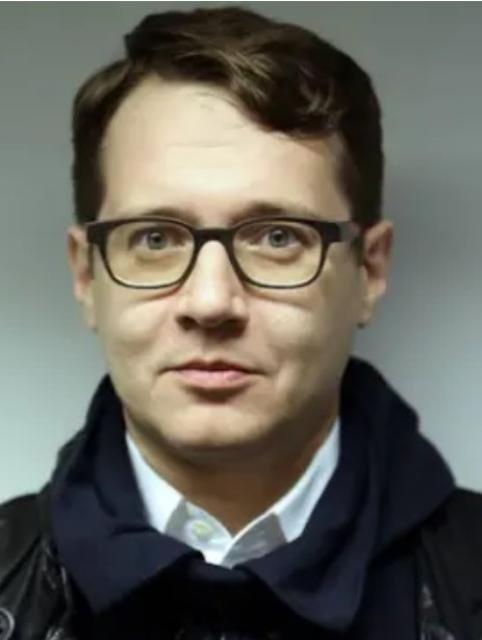
Ilya Hrganovsky
 Russia
- Ilya Khrzhanovsky: A Visionary Filmmaker Breaking Boundaries
- Early Career Success
- Personal Life
- Cinematic Visionary
- The Ambitious "Dau" Project
- Berlinale Controversy and Acclaim
- Current Projects and Impact
Ilya Khrzhanovsky: A Visionary Filmmaker Breaking Boundaries
Early Life and EducationOn August 11, 1975, acclaimed filmmaker Ilya Khrzhanovsky was born to animator Andrei Khrzhanovsky and philologist and film editor Maria Neiman. Influenced by his artistic family environment, he initially aspired to pursue painting or a military career. In the mid-1990s, Khrzhanovsky enrolled in the painting faculty of the Bonn Academy of Arts in Germany. Returning to Moscow, he studied directing at the Gerasimov Institute of Cinematography under the renowned Marlen Khutsiev.
Early Career Success
At the age of 22, Khrzhanovsky presented his debut stage production, "To, What I Feel," at the International KUKART Festival. A year later, he co-directed the short film "Stop" with Artem Mikhalkov. In 2020, he disclosed his Ukrainian heritage, stating that his mother was born in Vinnytsia and his paternal ancestors lived in Ukraine.
Personal Life
Khrzhanovsky has been married twice. His first marriage to actress Alexandra Kulikova produced a son, Andrei. They divorced due to the geographical distance between their work in Moscow and St. Petersburg. Khrzhanovsky acknowledges his son's changing attitudes towards relationships and mortality as reflective of generational shifts. His second marriage to Svetlana Marich, Deputy Head of Phillips auction house, resulted in a daughter, Maria. They divorced in 2018.
Cinematic Visionary
Khrzhanovsky is known for his prolific filmography, which includes both critically acclaimed and controversial works. His 1998 short film "Stop" won several awards, including at the "Saint Anna" and "Molodist" festivals. In 2004, his film "4" based on the novel by Vladimir Sorokin, sparked controversy for its depiction of contemporary Russian society.
The Ambitious "Dau" Project
Khrzhanovsky's most ambitious work is the sprawling art project "Dau." Initially conceived as a biopic of physicist Lev Landau, it evolved into a massive scale production with a permanent filming location in Europe. Non-professional actors, including conductor Teodor Currentzis, improvised without a script, immersing themselves in a meticulously recreated pre-war Stalinist era. Despite financial and administrative setbacks, the project culminated in a 700-hour-long cinematic experience, edited into 16 separate films by March 2020.
Berlinale Controversy and Acclaim
At the 2020 Berlin International Film Festival, the premiere of two "Dau" films, "Natasha" and "Degeneration," sparked immense controversy. Khrzhanovsky faced accusations of pornography and violence during the shooting. He vehemently defended the project, stating that no abuse or exploitation occurred. The "Silver Bear" award he received for "Outstanding Artistic Contribution" was met with both praise and criticism.
Current Projects and Impact
Khrzhanovsky continues to push the boundaries of filmmaking with his thought-provoking and immersive works. His films have garnered international recognition for their unflinching examination of human nature and the complexities of modern society. As a visionary artist, Ilya Khrzhanovsky remains a influential force in contemporary cinema, sparking discussions and challenging societal norms through his audacious and groundbreaking projects.


