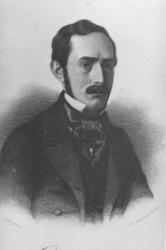
Inigo Jones
 Great Britain
Inigo Jones: The First and Greatest Representative of Palladianism in England
Inigo Jones, an English architect, was born into a weaver's family and was baptized on July 19, 1573. He is known as the first and greatest representative of Palladianism in England.
Early Projects and Influences
In 1608, upon the commission of the Earl of Salisbury, Jones created a design for the New Exchange on the Strand, which was later demolished in 1737. Around the same time, he also made a drawing of the spire of the old St. Paul's Cathedral. From 1611 to 1612, Jones led architectural works for Prince Henry, the heir to the throne. In 1613-1614, he visited Venice, Vicenza, Bologna, Florence, Siena, Rome, and Genoa. During this journey, the buildings of Andrea Palladio made a profound impression on him. In Venice, Jones met the architect Vincenzo Scamozzi, a follower of Palladio.
Appointments and Major Projects
In 1615, Jones was appointed Surveyor of the King's Works. His first significant commission in this role was the construction of Queen's House in Greenwich, which began in 1617 but was interrupted until 1635 due to the death of the queen. After the old Banqueting House at Whitehall Palace burned down in 1619, Jones took on its restoration (the hall survives to this day). The construction was completed in 1622, and in 1635, the ceiling of the hall was painted by Rubens. In 1620, at the request of King James I, Jones conducted a study of Stonehenge and erroneously concluded that it was the remains of a Roman temple. In 1623, he built a chapel next to James I's palace to celebrate the arrival of Prince Charles' Catholic bride (now known as the Marlborough House Chapel). After Charles I ascended the throne in 1625, Jones made a series of additions to Somerset House, the future residence of the new queen, Henrietta Maria. Another major project of this period was the restoration design of the old St. Paul's Cathedral, which began in 1631. Jones attempted to give the Gothic church a more classical appearance by adding a grand Corinthian portico on the west side. However, construction was halted before the start of the revolution, and the cathedral was demolished after the Great Fire of London in 1666.
Contributions to Architecture
Jones created the type of London townhouse and undertook several urban planning initiatives. In 1630, he designed the first square in London, Covent Garden, which was later rebuilt. In 1643, the buildings belonging to the king were confiscated by Parliament, and Jones's position was abolished. Inigo Jones passed away on June 21, 1652.
In his work, Jones departed from the English architectural tradition based on late Gothic principles and sought to establish a classical style inspired by Serlio, Palladio, and Scamozzi. The English Palladianism of the 18th century was largely a continuation of the revolution initiated by Jones. The most significant surviving structures designed by Jones are the Banqueting House at Whitehall and Queen's House in Greenwich. These buildings demonstrate his excellent command of classical architectural principles. The largest collections of Jones's drawings and designs are housed in Chatsworth (costume and set designs for masques) and Worcester College, Oxford University (including a complete set of drawings from around 1638 for the reconstruction of Whitehall Palace).