Innokentiy X
 Vatican
- Innocent X: Pontiff of Conviction and Controversy
- Early Life and Ecclesiastical Career
- Election and Personal Influences
- Conflict with the Barberini
- External Policy and the Westphalian Peace
- Doctrinal Controversies
- Territorial Expansion and Civil War
- Legacy and Impact
Innocent X: Pontiff of Conviction and Controversy
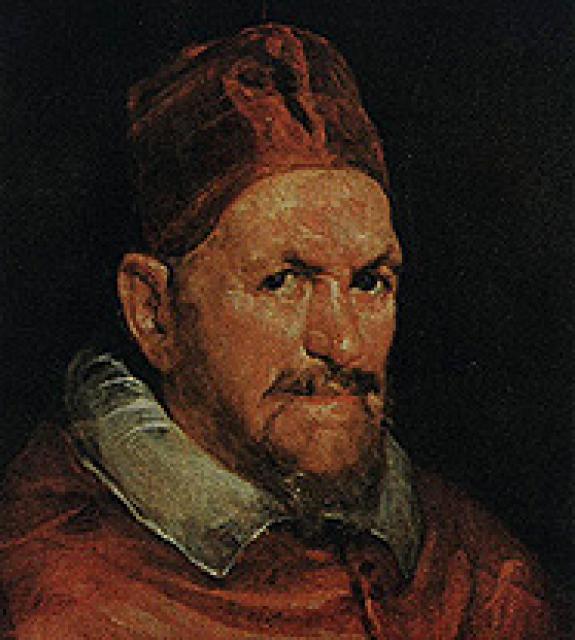
Innocent X, born Giovanni Battista Pamphilj, was an Italian prelate who ascended to the papal throne in 1644. His papacy was marked by staunch opposition to political and doctrinal deviations, as well as internal conflicts and controversies.
Early Life and Ecclesiastical Career
Pamphilj received a bachelor's degree in law and joined the Curia, the administrative body of the Catholic Church. Under Pope Urban VIII, he was granted the titular patriarchate of Antioch and appointed a cardinal in 1626. After Urban's death in 1644, a tumultuous conclave ensued.
Election and Personal Influences
Amidst the political machinations, Pamphilj emerged as a compromise candidate, despite his pro-Spanish leanings. He ascended to the papacy as Innocent X and extended nepotism to his family. His mother, Olimpia Maidalchini, wielded significant influence in papal affairs, earning the unofficial title of "Papessa."
Conflict with the Barberini
Soon after his election, Innocent X initiated a prosecution against cardinals Antonio and Francesco Barberini, accusing them of embezzlement. The cardinals fled to France, seeking refuge under Cardinal Mazarin. In 1646, the pope issued a bull decreeing that cardinals who abandoned the Papal States without papal permission and failed to return within six months would be deprived of their rank and property. This action targeted the Barberini's estates, but under threat of French military intervention, they were eventually pardoned.
External Policy and the Westphalian Peace
Innocent X adamantly opposed the terms of the 1648 Treaty of Westphalia, which concluded the Thirty Years' War. His bull, "Zelo domus Dei," condemned the accord as a violation of ecclesiastical law. However, his protest was disregarded by the European powers.
Doctrinal Controversies
Innocent X also confronted theological departures within the Catholic Church. In 1653, he issued the bull "Cum occasione," condemning five propositions associated with Jansenism, a religious movement in France. The pontiff's condemnation played a significant role in the suppression of Jansenism.
Territorial Expansion and Civil War
On a territorial level, Innocent X expanded the papal holdings by capturing the small principality of Castro. In England's Civil War, the pope supported the Irish rebels but faced disappointment when Archbishop Rinuccini, dispatched to Ireland in 1649, returned without success after Cromwell's suppression of the uprising.
Legacy and Impact
Innocent X's papacy was a turbulent period marked by internal conflict, doctrinal debates, and political disputes. His staunch opposition to external pressures showcased his determination to uphold papal authority, while his condemnation of Jansenism contributed to the church's doctrinal orthodoxy. His legacy remains debated, with some historians viewing him as a defender of tradition and others as an authoritarian ruler.