Iogann Dellinger
 Germany
- Biography of Johann Döllinger
- Academic Career and Activism
- Shift in Views
- Critical Views and Opposition
- Role in Vatican Council and Excommunication
- Stance as a Scholar and Activist
- Later Life and Contributions
Biography of Johann Döllinger
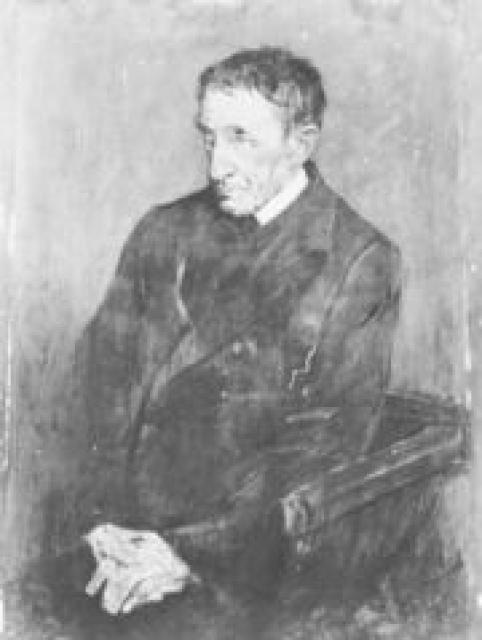
Early Life and EducationJohann Döllinger was born on February 28, 1799, in Bamberg, Bavaria. He was a Bavarian Catholic priest, Church historian, and theologian. In 1816, he enrolled at the University of Würzburg to study history, philosophy, and natural sciences. After completing his studies, he joined the seminary in Bamberg, where he was ordained as a priest on April 22, 1822. He was then appointed as a chaplain in Scheinfeld, Middle Franconia. Döllinger defended his doctoral dissertation on the doctrine of the Eucharist in the first three centuries in 1826.
Academic Career and Activism
In 1826, Döllinger was invited to teach canon law and church history at the University of Munich. From the late 1820s, he actively participated in socio-political movements and became one of the leaders of the Catholic Movement, which opposed the German authorities' attempts to use religion and the Catholic Church for their political goals. Initially, he held strictly ultramontane views.
Shift in Views
In 1849, at the assembly of the Catholic Association of Germany in Regensburg, Döllinger delivered a speech titled "The Freedom of the Church," where he presented the idea of German bishops' autonomy from Rome to the extent that it did not hinder Catholic unity. Starting from 1850, he began to advocate for the independence of the German bishops from Rome, which was close to Febronianism (named after Johann Nikolaus von Hontheim (1701–1790) - "Justin Febronius").
Critical Views and Opposition
In 1857, Döllinger traveled to Italy and was shocked by the state of administrative and economic affairs in the Papal States. This experience led him to completely abandon ultramontanism. He strongly criticized the papal absolutism and vehemently opposed the attempts by the Jesuits to revive scholastic theology.
Role in Vatican Council and Excommunication
During the First Vatican Council, Döllinger became the ideological leader of the liberal party, which opposed the ultramontanists. He criticized the dogmatic positions on the primacy and infallibility of the Pope substantially, unlike the opposition at the Council who mainly considered them untimely. His book "The Pope and the Council" (1869) was placed on the Index of Forbidden Books on the eve of the Council.
Stance as a Scholar and Activist
Under the pseudonym "Quirinus," Döllinger, together with I. Guber, published 69 letters in the Augsburger Allgemeine Zeitung in 1869-1870, which criticized the theological and historical inadequacy of the dogma of papal infallibility. These letters served as a source of information about the progress of the Council for the external world, and the authors themselves received information from the liberal-minded papal librarian Augustin Theiner. He led a protest by 49 professors at the University of Munich and issued a declaration against the Council's decisions in August 1870. In 1871, after refusing to sign the Council's definitions, he was excommunicated by the Archbishop of Munich, G. von Scherr. He declined the opportunity to be consecrated as a bishop by the Dutch Old Catholic bishop, Henricus Loos.
Later Life and Contributions
In 1873, Döllinger was appointed President of the Bavarian Academy of Sciences by King Ludwig II. In 1874 and 1875, he chaired the "Conferences of Reunion" in Bonn, which aimed to promote the unity of the Churches that maintained the faith and canonical structure of historical Christianity. His understanding of Christian unity is presented in his book "On the Reunion of Christian Churches" (1888). In his final moments, Döllinger received guidance from an Old Catholic priest.