Ion Degen
 Israel
Biography of Ion Degen
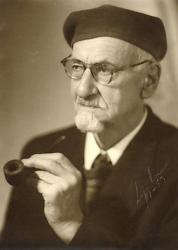
Ion Lazarovich Degen, a Russian, Soviet, and Israeli poet and writer, tank ace, doctor, and scientist in the field of orthopedics and traumatology, was born on June 4, 1925, in Mogilev-Podolsky, USSR, into a Jewish family of paramedics. His father passed away when Ion was only three years old. His mother, a dedicated communist, worked as a nurse and pharmacist but had to take up manual labor at a fruit and vegetable factory due to the lack of job opportunities in her field. From the age of twelve, Degen worked as an apprentice to a blacksmith. He also had a keen interest in literature, zoology, and botany. He was enthralled by the poem "Djinns" written by the French writer Victor Hugo in his youth. He drew inspiration from Yevgeniy Dolmatovsky and Vasily Lebedev-Kumach, and by the end of the war, Degen had memorized almost all of Vladimir Mayakovsky's poems.

Joining the War
On June 15, 1941, after completing the ninth grade, 16-year-old Degen volunteered for a pioneer camp located near a railway bridge over the Dniester River. The following month, he volunteered for the front and joined a fighter battalion that recruited students from the 9th and 10th grades. As a Red Army soldier, Ion participated in combat operations as part of the 130th Rifle Division. He ended up in a hospital in Poltava after being wounded in the soft tissues of his thigh above the knee. Degen was lucky that his body responded well to treatment, as his leg was almost amputated at first. In mid-June 1942, he was assigned to the reconnaissance department of the 42nd separate armored train division. This division was stationed in Georgia and had the "Kuzbass Railwayman" and "Siberian" armored trains at its disposal. In the autumn of 1942, the division was tasked with covering the routes to Mozdok and Beslan. Degen became the commander of a reconnaissance unit. On October 15, 1942, he was wounded again while on a mission behind enemy lines. After leaving the hospital, Degen became a cadet in the 21st Tank Training Regiment in Shulaveri. Later, he was sent to the first Kharkov Tank School in Chirchik. He successfully completed his training in the spring of 1944 and was promoted to the rank of junior lieutenant. In June 1944, Degen came under the command of Colonel Y.E. Dukhovniy when he was appointed tank commander in the 2nd Separate Guards Tank Brigade. Ion took part in the Belarusian offensive operation in 1944 and became the commander of a tank platoon. He commanded a tank company (T-34-85) and held the rank of Guard Lieutenant. Degen stated that on the battlefield, he was not the only one who felt like "a mortal." Many others didn't care where they would face death, whether in a penal battalion's infantry battle or a tank attack in their brigade. He was a true Soviet tank ace. In battles as part of the second separate tank brigade, his crew destroyed 12 enemy tanks, including one Tiger and eight Panthers. They also eliminated four self-propelled guns, including one heavy self-propelled gun called "Ferdinand," multiple machine guns, mortars, and German soldiers.

Life after the War
After surviving miraculously in Belarus and Lithuania during the summer of 1944, Degen earned the nickname "Lucky." During the war, he received multiple burns and four wounds. As a "reward" from the Germans, he was left with 22 shrapnel fragments and bullets. He became disabled after his most severe injury on January 21, 1945. Degen was twice nominated for the title of Hero of the Soviet Union, but both times, he was only awarded orders. To be honest, his Jewish nationality hindered his chances of receiving the highest recognition. Witnessing the heroic acts of doctors saving wounded soldiers, Ion decided to become a doctor himself after the war and never regretted his choice. He received his diploma from the Chernovtsy Medical Institute in 1951. Initially, Degen worked as an orthopedic traumatologist at the Kiev Orthopedic Institute until 1954, and then in various hospitals in Kiev until 1977.
On May 18, 1959, Ion performed the first successful replantation of a detached limb or its segment in medical practice. In his case, it involved the reattachment of a forearm. Degen defended dissertations entitled "Non-free Bone Transplant in a Circular Stem" and "Therapeutic Effects of Magnetic Fields on Certain Musculoskeletal Disorders." He authored over 90 scientific articles. As an orthodox communist, Degen began to realize the deceptive nature of Marxist-Leninist teachings. He felt that his homeland was rejecting him as a foreign object, and in 1997, at the age of 52, he repatriated to Israel. In the Promised Land, he continued to work as an orthopedic doctor for over 20 years. He recounted his life in his ancestors' land in the novel "From the House of Slavery." His wife found work as an architect at the University of Jerusalem, and his son, a theoretical physicist, defended his dissertation at the Weizmann Institute of Science.
Among Degen's other works, influenced by his love for literature, are "The War Never Ends," "Unbelievable Stories About the Incredible," "Immanuel Velikovsky," "Heirs of Asclepius," and others. His stories and essays were published not only in Russian and Israeli magazines but also in Ukraine, Australia, the United States, and other countries.
One of Degen's most famous poems, "My Comrade, in the Deadly Agony...," was born in December 1944. For a long time, the poem was rewritten and passed down orally with various distortions and versions. The poem acquired a folk character, and the authorship of the "unknown frontline soldier" Ion Degen became known only in the late 1980s.