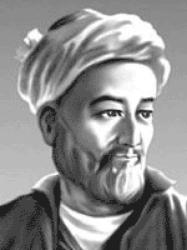
Irina Kalinets
 Ukraine
Biography of Irina Kalynets
Irina Kalynets is a Ukrainian poet, dissident, activist of the Ukrainian national and human rights movements, artist, and philologist. She was born into a religious family of the Ukrainian Greek-Catholic Church. Kalynets graduated from the Slavic Department of the Faculty of Philology at Lviv University, specializing in teaching. She worked as a methodologist at the regional House of Folk Creativity, as a teacher, librarian, and as a teacher of the Ukrainian language and literature at Lviv Polytechnic Institute (now Lviv Polytechnic National University). In 1990, Kalynets was elected as a deputy of the Verkhovna Rada of Ukraine. From May 1990, she served as the head of the Lviv Regional Education Department. She carried out reforms in the school system to promote the Ukrainian language, including the removal of Russian language classes from primary schools, the reduction of Russian schools and classes in Lviv and the region, and changes to the curriculum, among other initiatives. During the persecutions for her advocacy for Ukrainian cultural figures in 1970, she was dismissed from her job and worked as a weaver. Kalynets also taught language and literature at a school.
In July 1970, she signed a protest along with nine citizens of Lviv against the arrest of Ukrainian dissident Valentyn Moroz. Later that year, she and her husband sent a petition to the USSR Prosecutor's Office requesting permission to attend Moroz's trial. She wrote a letter to the Chairman of the Council of Ministers of the USSR, Kosygin, on behalf of Moroz's relatives and friends, and a letter to the Verkhovna Rada of the Ukrainian SSR protesting against violations during the trial. In December 1971, she signed a declaration to establish the Public Committee for the Defense of dissident Nina Strokata. In January 1972, she was arrested and sentenced in July of the same year to 6 years of imprisonment in strict regime camps and 3 years of exile for "anti-Soviet agitation and propaganda." Six months later, her husband, poet I.M. Kalynets, was also sentenced on the same charges. She served her sentence in the Chita region and was released in 1981.
From the mid-1980s, Kalynets was an activist in the socio-cultural life of Western Ukraine and Lviv, participating in the consciousness-organizing organization "Memorial" and the People's Movement of Ukraine. Irina Kalynets is the author of the collections "Poetry," "Marriage with Polyhymnia," children's books "Stork and Black Cloud," "Tales of a Toy Phone" (2001), "Pimbo-Bimbo" (2000), the historical detective novel "Murder of a Millennium" (2002), monographs such as "Studies on the 'Tale of Igor's Campaign'," "Mysteries of the Baptism of Ukraine-Rus'," and the scientific research "Taras Shevchenko and Saint Augustine," as well as numerous journalistic articles, essays, and more. In 1998, she was recognized as a "Heroine of Peace" (USA, Rochester) for her public activities, and in 2000, she was awarded the Order of Princess Olga of the third degree.