Irzhi Wayl
 Czech
Czech- Biography of Jiří Weil
- Work in Moscow and Exile
- Literary Career and Persecution
- Post-War Career and Repression
Biography of Jiří Weil
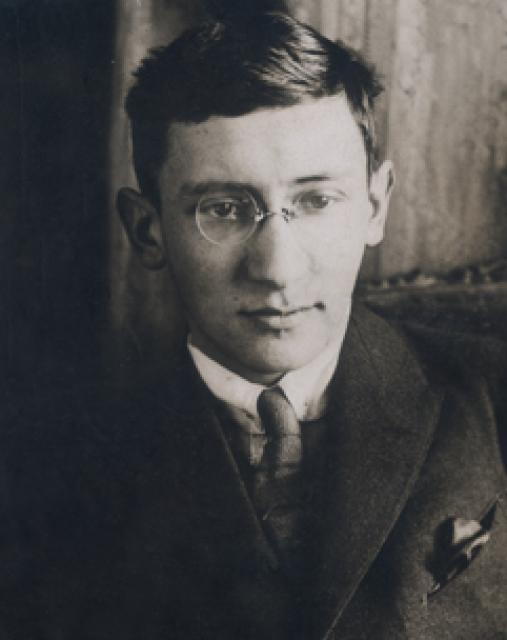
Jiří Weil was a Czech writer, journalist, and translator. He was born into a well-off Jewish family. In 1921, he joined a youth communist organization. The following year, he visited Moscow as part of a delegation. He had a keen interest in Russian and Soviet culture and wrote articles about Soviet literature for the newspaper Rude Pravo. Weil was a member of the avant-garde literary group Devětsil and translated works by Mayakovsky, Pasternak, Tsvetaeva, Lugovsky, Gorky, and Zoshchenko. He completed his studies at Charles University in 1928, where he defended a thesis on Gogol and the 18th-century English novel.
Work in Moscow and Exile
From 1933 to 1935, Weil worked in Moscow as a journalist and translator of Marxist literature and official documents of the Comintern into Czech. He also participated in the translation of Lenin's work, "State and Revolution." However, after the assassination of Kirov, he was falsely accused, expelled from the party, and sentenced to exile in Kazakhstan. He returned to Prague in 1935 and worked as a research associate at the Jewish Museum.
Literary Career and Persecution
Weil published the novel "Moscow - the Border" in 1937, which depicted Stalinist purges. The book faced severe criticism from Czech communists, particularly Julius Fučík, a close friend of Weil. The sequel to this novel, "The Wooden Spoon," was one of the first works to portray the Gulag and was published in Italy in 1970. It circulated in the Czech samizdat from 1977 and was officially published in 1992. Weil continued working at the Jewish Museum in Prague until 1938.
In 1942, facing deportation as a communist and Jew, Weil faked his suicide and went into hiding for the duration of World War II. He continued writing during this period.
Post-War Career and Repression
After the war, Weil resumed his active career. From 1946 to 1948, he served as the editor-in-chief of the journal "Literarni noviny" and published the historical novel "Makanna, Father of Miracles" in 1946. However, when the Communists came to power in 1948, Weil was removed from his position, expelled from the Writers' Union, and his novel "Life with a Star" underwent ideological revision. From 1949 to 1957, his works were not published. He was finally rehabilitated in 1958.
Weil's last novel, "Mendelssohn on the Roof," was published in 1960, after his death from cancer. Jiří Weil's works reflect his experiences and provide insights into the political and social turmoil of his time.