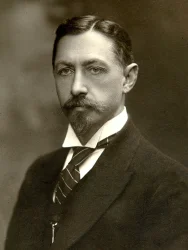
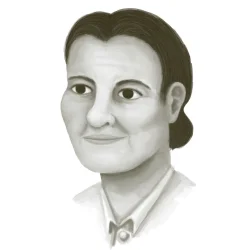
Isaak Babel
Isaac Babel transformed the violence and contradictions of early Soviet life into stories of extraordinary precision. He wrote about the Jewish neighborhoods of Odessa, the revolution’s promises and the brutality of the Civil War with a style that could be lyrical one moment and unsettlingly blunt the next. His two best-known collections, *Odessa Stories* and *Red Cavalry*, made him one of the most distinctive Russian-language writers of the 20th century. His career was cut short by the same Soviet state whose revolution had once drawn him in.
Odessa and the Making of a Writer
Babel was born in Odessa on 30 June 1894, then part of the Russian Empire. He grew up in a Jewish family in a city known for its vibrant, multilingual culture and sharp social divisions. His childhood later became material for fiction, especially in stories about Jewish life, poverty and ambition in the port city.
As a young man, Babel studied commerce and languages before turning to writing. In 1916 he traveled to Petrograd, where the established writer Maxim Gorky published several of his early stories. Gorky’s encouragement helped open literary doors, though Babel’s frank treatment of sex, poverty and violence also drew criticism. He developed a compact, carefully shaped prose style that made brief scenes carry emotional weight.
*Red Cavalry* and *Odessa Stories*
After the 1917 revolutions, Babel worked in a range of roles, including journalism and translation. In 1920 he joined the First Cavalry Army as a correspondent during the Soviet-Polish War. He recorded the campaign in notebooks and dispatches, later turning his experience into *Red Cavalry* (1926). The stories portray war from close range: alongside revolutionary enthusiasm are brutality, fear and the uneasy position of a Jewish intellectual among Cossack horsemen.
The book brought Babel fame and controversy. Commander Semyon Budyonny criticized its portrait of the cavalry, while other readers admired its refusal to turn the conflict into a simple heroic tale. Babel’s writing balanced admiration and horror, drawing out the contradictions between idealism and the cost of political violence.
His *Odessa Stories*, published in book form in 1931, returned to the city of his youth. The cycle’s colorful underworld characters, especially the gangster Benya Krik, helped create a mythic Odessa in Russian literature. The stories mix humor, bravado and tenderness, preserving the city’s Jewish speech and street life through a highly crafted literary voice.
Censorship and Arrest
During the 1930s, Soviet cultural life became more tightly controlled. Babel attended the 1934 Congress of Soviet Writers but published less and less as official expectations narrowed around socialist realism. He continued to write, including plays and screen work, but many projects remained unfinished or unpublished. His careful silences and gaps in the record reflect the pressure under which writers worked.
In May 1939, the NKVD arrested Babel. Authorities accused him of political crimes and espionage; the charges were part of Stalin’s purges, and there is no credible basis for treating them as true. After a closed proceeding, he was executed on 27 January 1940. His family was not told the truth for years, and his papers and manuscripts were confiscated.
Legacy
Babel was formally rehabilitated in 1954, and his reputation gradually returned to public life. Some manuscripts were lost, but his stories survived through editions and the efforts of his family and literary executors. He is now read as a master of the short form, a writer whose compressed sentences could hold humor, beauty and moral unease at once.
His work remains powerful because it never makes violence easy to admire. In *Red Cavalry*, the revolution is both a cause and a wound; in the Odessa stories, comic swagger sits beside vulnerability. Babel’s life ended in state repression, but the stories he left behind continue to give voice to the complicated people and histories that official narratives tried to flatten.