Isidor Gunsberg
 Great Britain
- From Budapest to the London Chess World
- A Challenger to the Champion
- Chess Writer and Public Figure
- A Lasting Place in Chess History
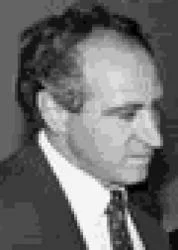
Isidor Gunsberg was one of the strongest chess players of the late nineteenth century, a Hungarian-born master who made his career in Britain and came within two wins of taking the world title from Wilhelm Steinitz. His reputation rested on more than one match: he won major tournaments, drew a long contest with Mikhail Chigorin and became a respected chess journalist. His career also began with an unusual role behind the scenes, as the hidden operator of the celebrated chess-playing automaton Mephisto.
From Budapest to the London Chess World
Gunsberg was born in Pest, then part of the Kingdom of Hungary, on 2 November 1854. He moved to England in 1876 and settled in London, where he joined a lively chess scene filled with clubs, public exhibitions and visiting masters. In his early years he worked as the concealed human operator of Mephisto, an automaton that appeared to play chess on its own. The machine’s performances helped attract large audiences, while Gunsberg’s actual skill steadily earned him recognition at the board.
By the early 1880s, he was playing leading competitors in serious tournaments and matches. His breakthrough came in 1885, when he won the strong Hamburg master tournament ahead of established names including Joseph Henry Blackburne and Siegbert Tarrasch. That result announced him as an international contender and opened the way to a decade among the world’s elite.
A Challenger to the Champion
Gunsberg continued to perform strongly in major events and matches. In 1890 he faced Mikhail Chigorin in Havana, where their match ended level after a long series of games. His success against one of the strongest players of the period helped establish his claim to a world championship match with Steinitz, who had held the title since the first official championship contest in 1886.
The match took place in New York from December 1890 into January 1891. Steinitz ultimately retained his title by 10½–8½, with six wins to Gunsberg’s four and nine draws. The close score made Gunsberg’s challenge one of the champion’s more difficult defenses. He twice narrowed the gap to a single game, but Steinitz responded with important victories to secure the match.
After that contest, Gunsberg remained a formidable tournament player, though he did not regain the same momentum. At the great Hastings tournament of 1895, he faced a field that included a new generation of leading masters. His results reflected a chess world changing quickly, as younger rivals and new approaches began to reshape competition.
Chess Writer and Public Figure
Gunsberg’s contribution to chess extended beyond tournament results. He wrote columns for British newspapers, including the Morning Post and the Daily News, and published “Chess Openings” in 1896. His journalism brought current games and ideas to a broad readership at a time when newspapers were a major source of chess instruction and news.
His role as a columnist also brought him into a rare legal dispute involving the game. In 1916 he successfully sued the London Evening News after it accused him of making blunders in his chess columns, winning damages. The case became an unusual moment when chess commentary itself entered a courtroom.
A Lasting Place in Chess History
Gunsberg died in London on 2 May 1930. His career is remembered chiefly for the 1890–91 match with Steinitz, but that headline achievement grew from years of tournament success and a sustained presence in British chess life. He bridged the worlds of competitive play, public exhibition and newspaper writing, helping make chess visible well beyond the tournament hall.
The contest with Steinitz remains a striking measure of his ability: Gunsberg faced a reigning champion at the height of his power and kept the match close to the end. He never held the world title, but his challenge established him among the leading masters of his era and gave British chess one of its most consequential early championship campaigns.