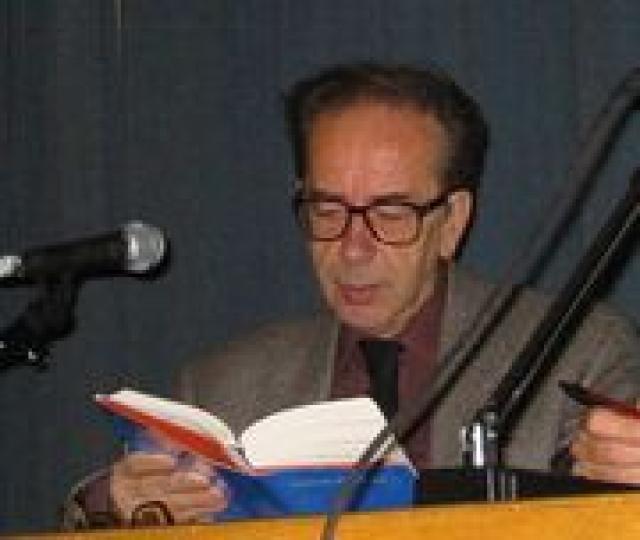
Ismail Kadare
 Albania
Biography of Ismail Kadare
Ismail Kadare is a prominent Albanian novelist and poet who has received numerous international literary awards. He was born in Gjirokastër, a beautiful city in southern Albania. Kadare began his career as a poet, publishing his first collection of poems, "Frymëzimet djaloshare" ("Youthful Impulses"), in 1957. He continued to write poetry and published his second collection, "Ëndërrimet" ("Dreams"), in the same year.
He studied at the Faculty of History and Philology at the University of Tirana and later pursued further studies at the Gorky Literary Institute in Moscow from 1959 to 1961. During his time in Moscow, he wrote his first novel, "Qyteti pa reklama" ("The City Without Advertising"), which depicted the struggles of Albanian youths in the puritanical conditions of communist Albania. However, the novel was deemed unacceptable by the censorship at the time and was only published in 1998.
After returning to Albania, Kadare lived under the harsh totalitarian regime of Enver Hoxha, which was one of the most brutal in Europe during the second half of the 20th century. Despite this, Kadare was able to create works that posed fundamental questions about the historical existence of the Albanian ethnic group. Although the majority of his works were published and recognized by the authorities, he was often subjected to censorship, criticism, and even physical labor as punishment for his perceived nonconformity.
Kadare's literary output shifted primarily from poetry to prose after his return to Albania. In 1963, he published the novel "Gjenerali i ushtrisë së vdekur" ("The General of the Dead Army"), which brought him fame within Albania and later gained European recognition upon its translation in 1970. The novel tells the story of Italian soldiers who died in Albania during the Italian occupation from 1939 to 1943. It stood out from the predominantly Soviet socialist realist literature of the time in Albania.
Throughout the years, Kadare continued to write novels and stories that explored various periods of Albanian history, delving into topics such as the Ottoman era, the struggle for independence, and the Communist regime. His works often displayed a love for depicting extreme situations and utilized multiple narrators, symbolism, and a blend of the mysterious and the rational.
In 1990, Kadare sought political asylum in France due to his disillusionment with the slow pace of political change in Albania. He lived in France temporarily until the political situation stabilized, and then divided his time between France and Albania. In this period, he published works that had previously been banned in Albania, including novels like "Hija" ("The Shadow") in 1994 and "Vajza e Agamemnonit" ("Agamemnon's Daughter") in 2003.
Kadare's literary achievements have been widely recognized, and he has been awarded prestigious honors such as the Chino del Duca Prize in 1992 and the Man Booker International Prize in 2005. He has also been nominated multiple times for the Nobel Prize in Literature.


