Iudzhin ONil
 USA
USAEugene O'Neill Biography
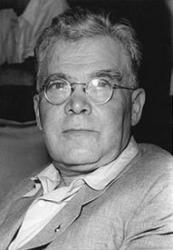
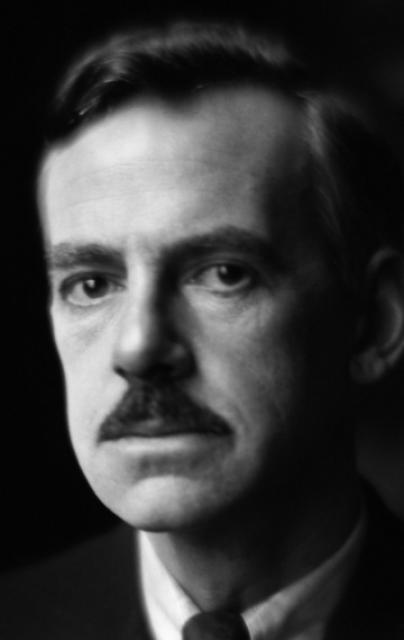
Eugene Gladstone O'Neill, an American playwright, was born in New York and was the third son of Ella (Quinlan) O'Neill and James O'Neill, a prominent actor who gained fame for his role as Count of Monte Cristo in the melodrama of the same name. As Ella and her husband lived a nomadic lifestyle, Eugene spent the first seven years of his life "in hotels and trains," which he and his mother, who lived in constant worry and poverty, did not enjoy. At the age of seven, Eugene attended a Catholic boarding school in New York, and three years later, he transferred to a day school in New London, Connecticut, where they were living at the time. During these years, Ella O'Neill developed an addiction to morphine, which had a depressing effect on her teenage son. Raised in Catholic traditions, O'Neill prayed for his mother's recovery, but when all his efforts proved futile, he became disillusioned with the church. In 1902, O'Neill enrolled in the Betts Academy, a boarding school for Protestants and Catholics in Stamford, Connecticut. Although he performed poorly academically, he read extensively and eagerly. In 1906, he was accepted into Princeton University, but he did not apply himself to his studies and dropped out after his first year. During these years, Eugene was influenced by his older brother James (Jamie), who introduced the young O'Neill to the nightlife of New York. After leaving Princeton, O'Neill led a dissipated life and in 1909, a few weeks before his 21st birthday, he married Kathleen Jenkins against his father's wishes. Shortly after the wedding, he became a gold prospector in Honduras, returned to New York briefly in 1910 when his son Eugene was born, and then went to England for a year and a half before traveling to Argentina, where he lived as a tramp and beggar. In 1911, his wife divorced him, and O'Neill reunited with his son when he turned 12. Eugene Jr., who later became a theater critic, ended his life by suicide at the age of 40. In 1911, O'Neill returned to New York, worked odd jobs, and drank heavily. In 1912, he attempted suicide and decided to start a new life. He became a reporter for a newspaper in New London, where his parents lived during the summer, but after a few months, he contracted tuberculosis and was admitted to a private sanatorium, where he spent six months reflecting on life and experiencing what he would later call a "second birth." It was during this time that O'Neill began writing plays, determined to "become an artist at any cost." In 1914, he entered George Pierce Baker's drama seminar at Harvard University. Although he did not complete the full course, he managed to write seven one-act plays, which were included in the collection "Thirst and Other One-Act Plays" (1914). O'Neill's first play to be produced was "Bound East for Cardiff," staged alongside other "sea" plays that challenged the commercial nature of Broadway theater by the Provincetown Players on an abandoned wharf in Provincetown in the summer of 1916. When the Provincetown Players opened the Playwrights' Theater in Greenwich Village, the production of "Bound East for Cardiff" marked O'Neill's New York debut. His early plays were set in sailors' quarters and ports, with characters consisting of sailors and dockworkers, which went against the conventions of salon and domestic dramas that O'Neill vehemently rejected. Before he started writing, O'Neill read extensively the works of August Strindberg, whose plays served as a source of inspiration and "a lesson in modern drama," as he later wrote in his Nobel Prize acceptance speech. However, O'Neill drew inspiration more from his eventful life than from books. In 1920, his first full-length play, "Beyond the Horizon," premiered on Broadway, telling the bitter fate of two brothers, one a dreamer and the other a pragmatist. This play was awarded the Pulitzer Prize, the first of four that O'Neill received (his other Pulitzer Prize-winning plays include "Anna Christie," "Strange Interlude," and "A Long Day's Journey Into Night"). From 1920 to 1943, O'Neill wrote 20 full-length plays and several one-act plays, showcasing naturalistic, realistic, and expressionistic styles; comedies, tragedies, and adaptations of ancient Greek dramas. "Anna Christie" (1920) tells the story of two sailors and a fallen woman who redeems herself through genuine love. "The Emperor Jones" (1920), an expressionistic drama about Jones, a black Pullman porter who commits murder and becomes the ruler of an island in the West Indies, shocked the New York audience and established O'Neill as a leader of a new theatrical movement. Even greater fame came with "The Hairy Ape" (1922), which was controversial and led to accusations of blasphemy against O'Neill. "Desire Under the Elms" (1924) explores themes of incest, marital infidelity, and infanticide and immediately garnered attention for its tragic power and sharp conflicts, still considered a remarkable achievement in contemporary theater. "The Great God Brown" (1926) explores the conflict between idealism and materialism, using techniques of the expressionist theater, mask theater, and thus becoming a precursor of avant-garde movement in American theater. In the late 1920s and early 1930s, O'Neill was considered the leading American playwright, but his personal life was marred by tragedy. In 1918, he married writer Agnes Boulton, with whom he had a son named Shane and a daughter named Oona (she married Charlie Chaplin against her father's wishes when she was 18). Within three years, from 1920 to 1923, O'Neill lost his father, mother, and beloved brother Jamie, and in 1928, he divorced his second wife. In 1929, the playwright married for the third time to actress Carlotta Monterey, whom he had met in the early 1920s. In 1936, O'Neill became the first American playwright to be awarded the Nobel Prize in Literature "for the power of observation, the originality, and the depth of his dramatic works, which renewed the genre of tragedy." Due to illness, the writer was unable to attend the award ceremony but sent a text for his acceptance speech, in which he stated that "this award belongs not only to me but also to all my colleagues in America; for me, this Nobel Prize is a symbol of Europe recognizing the maturity of American theater." In the 1920s and early 1930s, O'Neill received an honorary degree from Yale University (1929) and wrote his most mature and original works, including "Marco Millions" (1928), a satirical romance on bourgeois civilization, materialism, and religious hypocrisy, centered around Marco Polo, and a nine-act drama "Strange Interlude" (1928), where characters share their innermost thoughts with the audience, which the other characters are not meant to hear; one of them speaks words that shed light on the meaning of the play's title: "Life is a strange interlude between what is past and what is still to come." In the trilogy "Mourning Becomes Electra" (1931), a reimagining of Aeschylus' "Oresteia," the action takes place in New England during the Civil War, and the premiere of "Electra" received critical acclaim and featured Alla Nazimova in the lead role. During this time, O'Neill also wrote his only comedy, "Ah, Wilderness!" (1933), suffused with poignant nostalgia. Towards the end of the 1920s and early 1930s, O'Neill planned to create a cycle of plays tracing the history of an American family, but in 1943, he completely lost his ability to work due to a severe nervous breakdown, leaving him unable to even hold a pen. As a result, he only managed to write two plays from the planned cycle: "A Touch of the Poet" (premiered in 1957 at the Royal Dramatic Theatre in Sweden) and "More Stately Mansions" (premiered in 1962 at the same theater). Although O'Neill's body of work is uneven, and some of his plays are criticized for melodrama and lack of expressive language, he is still considered one of the most outstanding American playwrights. As noted by English critic Martin Seymour-Smith, he was a "man who elevated his life's hardships into metaphors of universal suffering." While according to American critic John Gassner, "what distinguishes O'Neill from other modern tragic playwrights (including Chekhov) is perhaps that his characters are often pseudo-tragic because they lack the greatness of spirit and vitality," he also acknowledged that "O'Neill practically created American naturalistic drama, and without him, there would be no Caldwell's 'Tobacco Road' or Steinbeck's 'Of Mice and Men'." Distinguished American theater critic George Jean Nathan called O'Neill the "first playwright of the American theater" in 1946. "No one can compare to him," Nathan wrote, "in his ability to penetrate characters; no one knows people as deeply as he does; no one understands the stage and its possibilities as he does; his plays are characterized by unprecedented power, scale, and scope... His theater is a true university."