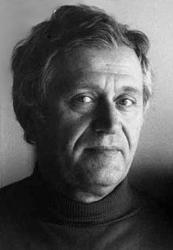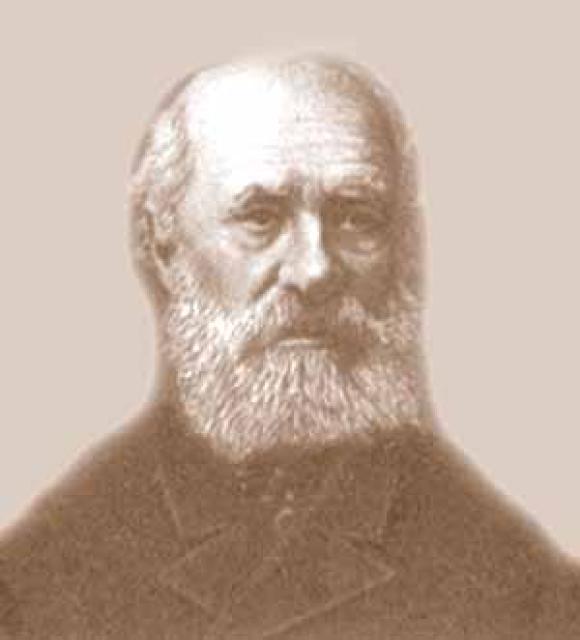
Iurij Arnold
 Ukraine
Biography of Yuri Arnold
Yuri Karlovich Arnold (1811-1898) was a composer and music theorist. He began studying music at a young age, taking piano lessons from A.I. Cherlitsky, a student of John Field. Arnold attended the University of Dorpat, but did not complete his studies. In 1831, he joined the Starodubsky Cuirassier Regiment to participate in the suppression of the Polish uprising. After leaving the military, Arnold studied harmony under Leopold Fuchs and counterpoint under O.K. Gunke.
In 1835, Arnold's first composition, the romance "Evening Bells" (Kozlov), was published. He went on to write an opera, "The Gypsy" (1836), and became acquainted with M.I. Glinka. In 1839, Arnold performed at a competition organized by the St. Petersburg Philharmonic Society with his ballad "Svetlana" (text by Zhukovsky). In 1842, 40 of his romances were published in St. Petersburg. He also met F. Liszt during this time and defended him in the press.
From 1842 to 1860, Arnold wrote a three-act opera titled "Nidia" or "The Last Day of Pompeii" (in his own German libretto). The opera was performed in parts in Russia and Germany but remained unpublished. He also composed operettas such as "Der Invalid" (1852) and "Treasure" or "Prayer to God, Service to the Tsar" (renamed "Night on Ivan Kupala"). In 1860, Arnold composed an overture to Pushkin's "Boris Godunov," which was performed overseas and later conducted by the composer himself in 1897.
Arnold's compositions, such as "Russian Ballad" and "Like Everyone Else" (with lyrics by Mea), were written in a Russian style. He also composed liturgical music, including "Liturgy of St. John Chrysostom" (Appendix to the journal "Music and Singing"). Many of Arnold's musical works were left unpublished. As a composer, he did not display a distinct individuality and was strongly influenced by German classical composers and Glinka.
Aside from his musical endeavors, Arnold also had a literary career. He wrote the drama "Kunstlerleben" (1852), the tragedy "Andreas Brunau" (1855), and the poem "August." He contributed to various Russian and German publications as a theater critic and music writer. In his article "Die Entwickelung der russischen National-Oper" (1863), published in the Leipzig journal "Neue Zeitschrift fur Musik," Arnold discussed the significance of Dargomyzhsky, introducing him to the German press. He served as the editor of "Zeitschrift fur Theater und Musik" from 1867 to 1868.
Arnold taught musical aesthetics and forms at the Jan Guva Music Institute in Graz from 1868 to 1870. He later opened public music classes in Moscow, where he taught singing, music theory, and history for over 10 years. Arnold also conducted research on Russian church music, publishing several works on the subject, including "Die alten Kirchen modi historisch und akustisch entwickelt" (Leipzig, 1878) and "The Theory of Ancient Russian Church and Folk Singing." He also delivered lectures on music history and acoustics both in Russia and abroad.
In his later years, Arnold focused on vocal pedagogy, writing articles on the lack of good singers in Russia and publishing "The Theory of Vocal Placement" (unfinished). In 1892, he published his memoirs, covering the period from 1815 to 1875 and providing valuable insights into Russian life and music. Arnold also worked on the development of an "amplifier" to improve the sound and timbre of the piano, but his idea did not come to fruition before his death.