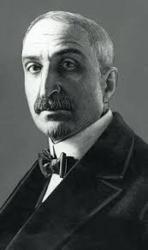
Ivan Boltin
 Russia
- Ivan Nikitich Boltin(1735-1792)
- Historical Research and Writings
- Historical Viewpoints
- National Identity and Enlightenment
- Influence and Legacy
Ivan Nikitich Boltin(1735-1792)
Early Life and CareerIvan Nikitich Boltin was born into a noble family in Russia in 1735. He received his initial education at home and, at the age of 16, joined the Horse Guards Regiment as a private. In 1768, he retired with the rank of Major General and was soon appointed director of customs in Vasilkovo. Ten years later, under the patronage of Prince Grigory Potemkin, he was transferred to the main customs office in St. Petersburg.
After the closure of the customs office in 1780, Boltin was appointed to the Military College, first as a prosecutor and then (in 1788) as a member of the college. His extensive travels throughout Russia provided him with firsthand knowledge of various aspects of Russian life.
Historical Research and Writings
Boltin was a dedicated historian who spent years studying Russian history from chronicles, charters, and published works, such as V.N. Tatishchev's "History." He assembled a vast collection of materials, which he used to write several important historical works, including:
- "Notes on Leklerk's History of Ancient and Modern Russia"(1788): A critical examination of the work of French historian Nicolas Gabriel LeClerc.
- "Critical Notes on Prince Shcherbatov's History"(1793-1794): A further critical analysis of contemporary Russian history.
Historical Viewpoints
Boltin's historical writings reflect a mechanistic view of history, influenced by the philosopher Jean Bodin. He believed that there was a causal relationship between physical conditions and human behavior, with climate playing a central role in shaping people's "morals."
He argued that laws and institutions should be adapted to the morals of the people rather than the other way around. This view led him to emphasize the importance of understanding Russian history in order to develop appropriate policies.
National Identity and Enlightenment
Boltin believed that Russia was unique among European nations due to its distinct physical environment and historical trajectory. He saw the coming of Rurik as the "embryo" of the Russian people, who developed their own distinctive "morals" and national character.
While he valued national individuality, Boltin also recognized the importance of enlightenment and Western influences. He believed that Russia should adopt the "knowledge and arts" of its Western neighbors while preserving its own moral values.
Influence and Legacy
Boltin's historical works were widely read and influential in the development of Russian historiography. His comprehensive knowledge and critical approach to historical inquiry set a high standard for subsequent historians. He remains one of the most respected figures in the field of Russian history.