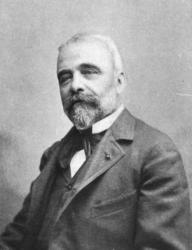
John Capgrave
 Great Britain
- John Capgrave: English Historian and Theologian
- Early Life and Education
- Academic and Ecclesiastical Career
- Literary Works
John Capgrave: English Historian and Theologian
John Capgrave was an English chronicler, theologian, and historian of the Hundred Years' War. He is renowned for his "Chronicle of England from the Creation to A. D. 1417."
Early Life and Education
Capgrave was born on April 21, 1393, in Bishop's Lynn (now King's Lynn), Norfolk. He spent much of his life there, stating in the prologue to his "Life of St. Katharine," "My cuntre is Northfolk, of the toun of Lynne." His precise ancestry is unknown, but he may have been the nephew of the Augustinian monk and Oxford theologian, Capgrave.
For five years, Capgrave studied theology at the Augustinian School in London and likely at the University of Cambridge. In 1410, he joined the Augustinian Order and was ordained a priest in 1417.
Academic and Ecclesiastical Career
In 1425, Capgrave received his Doctor of Divinity degree and taught at the university for two years, gaining recognition within his order. In 1445, he became Prior of the Augustinian Friary in Bishop's Lynn and, in 1453, Provincial of the order in England.
In 1449-1450, he undertook a pilgrimage to Rome, which he documented in detail. He died on August 12, 1464, in Bishop's Lynn.
Literary Works
Capgrave authored approximately 45 works, primarily theological, of which 12 survive. Five are written in Latin, while seven are in Middle English. Many are dedicated to his patron, Humphrey, Duke of Gloucester, and others to William Grey, Bishop of Ely.
His earliest dated work is the "Life of St. Norbert," written before 1422. Between 1446 and 1447, he compiled the "Book of Famous Henries" for King Henry VI, featuring biographies of European rulers named Henry from the 10th to 15th centuries.
Capgrave's most significant historical work is the "Chronicle of England from the Creation to A. D. 1417." Written in Middle English between 1461 and 1464, it covers world history until 1216 and English history from 1217 to 1417. Its sources include Jerome, Isidore of Seville, and Ranulf Higden's "Polychronicon." Capgrave was criticized for his lack of critical analysis and political bias, praising Henry IV Lancaster in early works but later considering him a usurper.
Other notable works include his "Life of Humphrey Duke of Gloucester," "Of Famous Men of the Augustinian Order," "New Legends of England," and a rhyming "Life of St. Katharine." He also compiled a "Guide to the Antiquities of Rome."