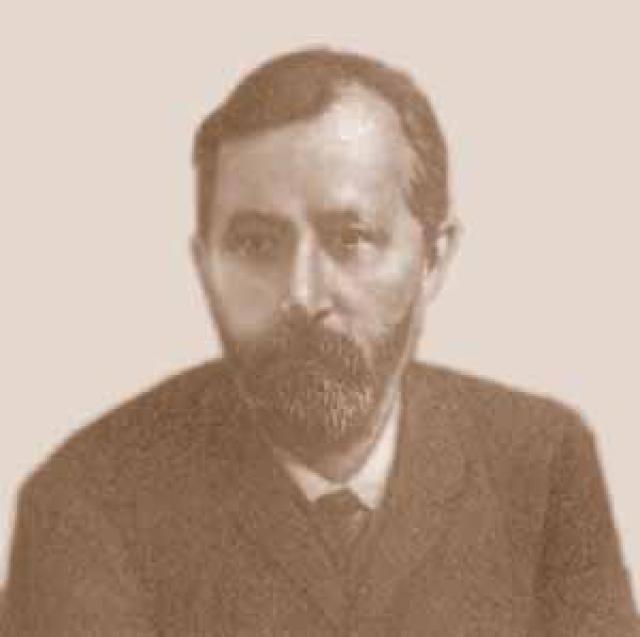
Ivan Grevs
 Russia
- Ivan Mikhailovich Greaves: Early Life and Education
- Influence of VG Vasilevsky
- Academic Career in the 1890s
- Inspiration from Fustel de Coulanges
- Academic Achievements and Dismissal
- Educational Work and Pedagogical Contributions
- Participation in Public Discourse
- Return to the University and Later Life
- Historico-Political Commentary
- Legacy and Impact
Ivan Mikhailovich Greaves: Early Life and Education
Ivan Mikhailovich Greaves was born in 1860 to a noble family in the Voronezh Governorate. His family's ancestry traced back to England, where they bore the name Greaves. Greaves studied at the Larinskaya Gymnasium and later at the Faculty of History and Philology at the University of St. Petersburg.
Influence of VG Vasilevsky
Greaves' academic interests were heavily influenced by Professor VG Vasilevsky. His seminal work, "The Roman-Byzantine State in the Sixth Century, According to the Legislative Collections of Christian Emperors," was conceived during his student years.
Academic Career in the 1890s
After graduating, Greaves taught history at the Gymnasium of E.P. Shaffe and other institutions. In 1889, he became a Privatdozent (unsalaried lecturer) at the University of St. Petersburg. During the 1890s, Greaves traveled extensively to Rome and Paris, where he researched the economic structure and social psychology of Roman society.
Inspiration from Fustel de Coulanges
Greaves' studies in Paris brought him into contact with prominent medievalists of the time, including Fustel de Coulanges. Coulanges' ideas had a profound impact on Greaves, instilling in him a belief in the role of consciousness in historical processes and the enduring influence of Roman culture.
Academic Achievements and Dismissal
Greaves published extensively, notably "Essays on the History of Roman Land Ownership" and "Data from Petronius for the Characterization of Large Land Ownership." He was a strong advocate for seminar-based research, but his involvement in student protests led to his dismissal as a Privatdozent in 1899.
Educational Work and Pedagogical Contributions
Undeterred by his dismissal, Greaves continued to play a significant role in education. He worked as a member or chair of commissions that established private schools and circles. As a teacher and chairman of the pedagogical council at the L.S. Tagantseva Women's Gymnasium, he developed a unique pedagogical method that emphasized transformative learning.
Participation in Public Discourse
Greaves' views on education and other social issues were reflected in his writings. He advocated for academic freedom, constitutional democracy, and the role of the university as a space for intellectual inquiry and societal progress.
Return to the University and Later Life
In 1902, Greaves was reinstated at the University of St. Petersburg and subsequently returned to the Higher Women's Courses. He became a prominent figure in academic reforms, particularly in the organization of seminar libraries and the integration of excursions into historical studies.
Historico-Political Commentary
Greaves contributed numerous articles to the "Encyclopedic Dictionary" (82 volumes) and served as the editor of the medievalism section of the present "Dictionary." His historical and political commentaries appeared in journals such as "Law," "Scientific Word," and "Polar Star."
Legacy and Impact
Greaves' work had a lasting impact on education and historical scholarship. His belief in the transformative power of knowledge and the importance of critical thinking continues to inspire generations of scholars and students.




