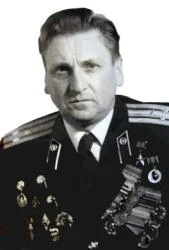
Ivan Konev
Ivan Stepanovich Konev (1897–1973) was a Soviet military commander who led major Red Army campaigns on the Eastern Front during the Second World War. A Marshal of the Soviet Union, he commanded forces in the battles for Ukraine, Poland, Berlin and Prague. His postwar career kept him at the center of Soviet military policy, including the suppression of the 1956 Hungarian uprising and the military buildup surrounding the Berlin Wall.
Early Life and Military Career
Konev was born on December 16, 1897, in the village of Lodeyno in the Vologda region of the Russian Empire; under the modern calendar, the date is December 28. He came from a peasant family and worked in forestry before being drafted into the Imperial Russian Army during the First World War. He served in artillery and joined the Bolsheviks after the 1917 revolutions.
During the Russian Civil War, Konev served in the Red Army and rose through its ranks. He attended the Frunze Military Academy and held a succession of command posts, including leadership of military districts and field armies. At the outbreak of the German-Soviet war in 1941, he was given command of the 19th Army and soon took charge of the Western Front.
Second World War
Konev’s early wartime record included setbacks, particularly during the German advance in 1941, but he remained in senior command. He later led the Kalinin and Steppe fronts and played major roles in the defense and counteroffensives around Moscow, the Battle of Kursk and the Soviet advance through Ukraine. He was appointed Marshal of the Soviet Union in 1944.
As commander of the 1st Ukrainian Front, Konev led operations across Poland and into Germany. His forces took part in the advance on Berlin from the south, operating alongside Georgy Zhukov’s 1st Belorussian Front. In May 1945, Konev’s troops entered Prague during the final Soviet offensive in Europe. He received the title Hero of the Soviet Union twice, in 1944 and 1945.
Postwar Command and Legacy
After the war, Konev held senior military posts, including commander of the Soviet Ground Forces and first supreme commander of the Warsaw Pact’s unified forces. In 1956, Soviet troops under his command helped crush the Hungarian uprising. He later served as commander of Soviet forces in East Germany during the period when the Berlin Wall was built in 1961.
Konev retired from active command but remained a prominent public figure and wrote memoirs about his wartime service. He died in Moscow on May 21, 1973, and was buried by the Kremlin Wall.
His reputation rests on both the operational successes of the Red Army’s final campaigns in Europe and his role in enforcing Soviet power during the Cold War. Statues and memorials in several countries have reflected changing views of that legacy, particularly where Soviet military intervention is remembered alongside the defeat of Nazi Germany.