Ivan Krno
 Slovakia
- Education and the Czechoslovak diplomatic service
- War and exile
- Building the UN’s legal department
- Legacy
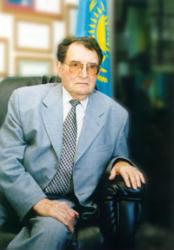
Ivan Krno was a Slovak lawyer and Czechoslovak diplomat who helped shape the legal work of the newly founded United Nations. Born in Myjava on September 26, 1891, he built a career across the diplomatic service of Czechoslovakia, the League of Nations, and the UN. As the first UN Assistant Secretary-General in charge of Legal Affairs, he organized the Secretariat’s legal department during its formative years. He died in New York on April 17, 1961.
Education and the Czechoslovak diplomatic service
Krno came from a family with a prominent Slovak legal and public-service tradition. He studied law at universities in Budapest and Paris, including the Sorbonne, and earned his doctorate in 1919. In October 1918, as the Habsburg Empire was collapsing and a new Czechoslovak state was taking shape, he entered the service of the Czechoslovak government’s representative in Vienna. From then on, diplomacy became his profession.
In 1919, Krno joined the Czechoslovak delegation to the Paris Peace Conference, where the postwar order in Central Europe was negotiated. Afterward he served at the Czechoslovak legation in Paris. His work increasingly focused on international organizations and the legal relationships among states.
In 1928, he joined the Secretariat of the League of Nations in Geneva. After returning to Prague, he continued in senior roles at the Foreign Ministry. He was appointed Czechoslovak envoy to the Netherlands in 1934 and served in The Hague for more than four years. In 1938, he returned to Prague to lead the ministry’s political section and became a formal deputy to Foreign Minister Kamil Krofta. He took part in difficult negotiations over Czechoslovakia’s borders with Hungary and Poland as the country faced growing pressure from neighboring powers.
War and exile
Following Germany’s occupation of the Czech lands in March 1939, Krno left for France and joined the developing Czechoslovak resistance abroad. After France fell to Germany, he lived underground until 1944. When France was liberated, he returned to service with the Czechoslovak government in exile.
Krno took part in the 1945 San Francisco Conference, where representatives of fifty countries drafted and signed the United Nations Charter. His experience in diplomacy and international institutions made him a natural choice for the new organization’s legal leadership. He also returned briefly to Prague after the conference before resuming international work.
Building the UN’s legal department
In April 1946, Krno became an Assistant Secretary-General of the United Nations in charge of the Legal Department, the role now known as the UN Legal Counsel. Serving under Secretary-General Trygve Lie, he organized the Secretariat’s legal work and guided its development for seven years. The department dealt with issues essential to the UN’s operation: interpreting the Charter, advising the Secretariat, supporting the General Assembly and other organs, and representing the Secretary-General in legal proceedings.
His work sat at the intersection of law and diplomacy. As states negotiated new rules and institutions after the Second World War, the United Nations needed a legal service capable of helping its officials act within the Charter and international law. Krno brought to the role experience from the League of Nations, the Czechoslovak Foreign Ministry, and the San Francisco negotiations. Secretary-General Dag Hammarskjöld later described him as one of the organization’s pioneers and credited him with directing the development of the Secretariat’s legal activities.
Krno resigned from the UN post in September 1952, following the Communist takeover in Czechoslovakia. He remained in the United States and became active in Czechoslovak exile circles, including organizations that assisted political refugees. He spent his final years in New York.
Legacy
Ivan Krno’s career spanned the collapse of empires, the creation of Czechoslovakia, the League of Nations, the Second World War, and the founding of the United Nations. He was among the small group of international lawyers who translated the UN Charter’s principles into the everyday legal work of a new global institution. His contribution was largely institutional and behind the scenes, but it helped establish the legal counsel’s office as a central part of the UN Secretariat.