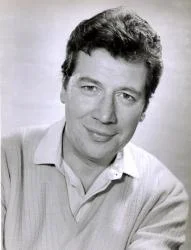
Izhar Cohen
- A musical family and an early start
- The breakthrough: “A-Ba-Ni-Bi”
- A return to Eurovision and a varied career
Izhar Cohen is an Israeli singer and actor whose exuberant performance of “A-Ba-Ni-Bi” helped Israel win the Eurovision Song Contest for the first time in 1978. With his expressive voice, flamboyant stage presence and a bright disco-pop anthem, he became a defining face of Israel’s emergence on the international pop stage. He returned to Eurovision in 1985 and has continued to be associated with one of the contest’s most enduring winning songs.
A musical family and an early start
Born on 13 March 1951, Cohen grew up in a family steeped in music. His parents were performers, and his grandparents had come to Israel from Yemen; Cohen has described the blend of Yemenite musical heritage, Israeli folk culture and the pop influences of his youth as central to his artistic identity. As a child he appeared with his family’s singing troupe, and later served in an Israeli military entertainment ensemble.
He was already building a profile as a singer before Eurovision. His first hit came in the early 1970s, and he released his debut album in 1976. Alongside singing, he developed an interest in acting and stage performance, a combination that would shape his larger-than-life style as a live entertainer.
The breakthrough: “A-Ba-Ni-Bi”
In 1978, Cohen represented Israel in Paris with the group Alphabeta and “A-Ba-Ni-Bi,” written by Ehud Manor and composed by Nurit Hirsh. The playful, rhythmic song won the contest and gave Israel its first Eurovision victory. Alphabeta was brought together for the performance, while Cohen’s confident delivery and visual flair made him its unmistakable center.
The win carried unusual weight at home: it was a landmark moment for Israeli popular culture and placed Cohen before a much wider international audience. The singer later recalled the sudden demands of fame as overwhelming. In an interview years afterward, he spoke openly about experiencing anxiety and a difficult period after his Eurovision success, and about eventually finding his way back to the stage.
A return to Eurovision and a varied career
Cohen represented Israel again at the 1985 contest in Gothenburg, performing “Olé, Olé.” The song finished fifth, giving him a second strong result on the Eurovision stage. He also entered Israeli national selections in later years, including a duet with his sister, singer Vardina Cohen.
Outside the contest, Cohen worked across music and theatre, recording albums and taking on acting roles. He also pursued jewelry design and ran a shop in Tel Aviv while continuing to perform. His career reflects an artist who has moved between pop music, stage work and visual design, yet remains best known internationally for the joyful song that brought Israel its first Eurovision crown.