Jackie Lindsey
 Great Britain
- Jackie Lindsay: A Victim of Electromagnetic Hypersensitivity
- Symptoms and Diagnosis
- Impact on Daily Life
- Coping Mechanisms
- Social Stigma
- Prevalence and Future Trends
- Conclusion
Jackie Lindsay: A Victim of Electromagnetic Hypersensitivity
Jackie Lindsay is a British woman who suffers from a rare and debilitating condition known as electromagnetic hypersensitivity (EHS). This condition makes her extremely sensitive to electrical and magnetic fields, which are emitted by electronic devices and other sources.

Symptoms and Diagnosis
For years, Lindsay experienced a range of neurological symptoms, including dizziness, eye pain, and numbness in her palms. However, it took several years for doctors to diagnose her with EHS. The condition is not well-recognized in the UK medical community, although it is considered a form of disability in other countries such as Sweden.
Impact on Daily Life
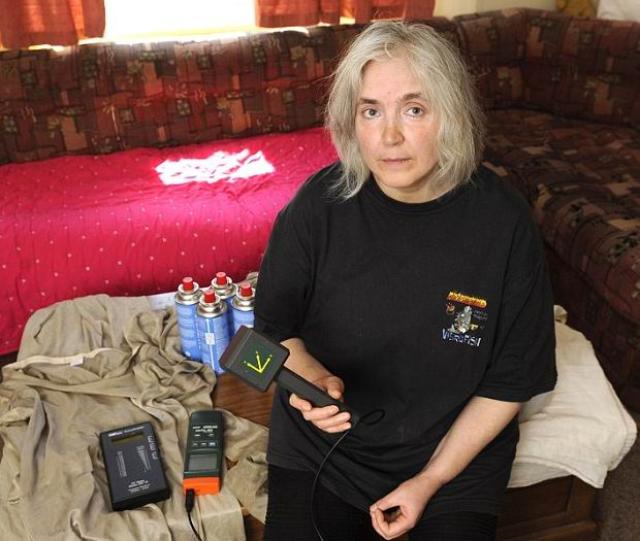
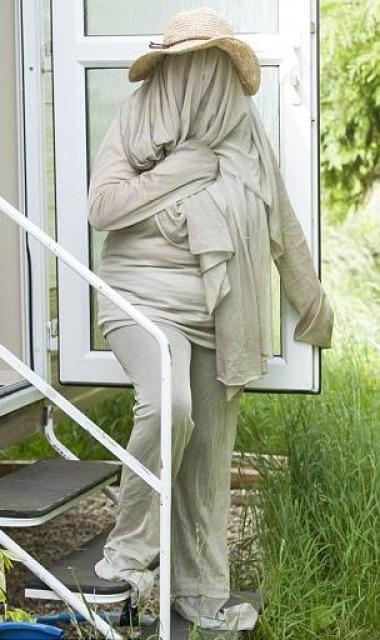
EHS has had a profound impact on Lindsay's life. She has had to give up all electrical appliances, including her mobile phone and Wi-Fi router. She heats her home with gas and lights it with candles. To protect herself from radiation, she wears a specially-designed silver suit that blocks out magnetic fields. She also carries an electromagnetic radiation scanner to assess the level of radiation in different environments.

Coping Mechanisms
Living with EHS can be extremely challenging. Lindsay has learned to avoid places with high levels of radiation, such as electrical substations and Wi-Fi hotspots. She can only go to the grocery store for a few minutes at a time. Despite these limitations, Lindsay remains determined to live as normal a life as possible.
Social Stigma
One of the most difficult aspects of living with EHS is the stigma associated with the condition. Many people are skeptical about the existence of the condition and view sufferers as mentally ill or hypochondriacs. Lindsay has faced this stigma both in her personal life and in the medical community.
Prevalence and Future Trends
According to the charity ES UK, up to 4% of the population may suffer from EHS. This number is expected to increase as technology becomes more prevalent.
Conclusion
Jackie Lindsay's story is a reminder that EHS is a real and debilitating condition. While there is no cure, there are ways to manage the symptoms and improve quality of life. As awareness and research on EHS increases, people like Lindsay may find more support and understanding.