Jacob van Eyck
 Netherlands
- Jacob van Eyck: Dutch Composer and Musician
- Early Life
- Contributions and Innovations
- Later Years and Achievements
- Legacy
Jacob van Eyck: Dutch Composer and Musician
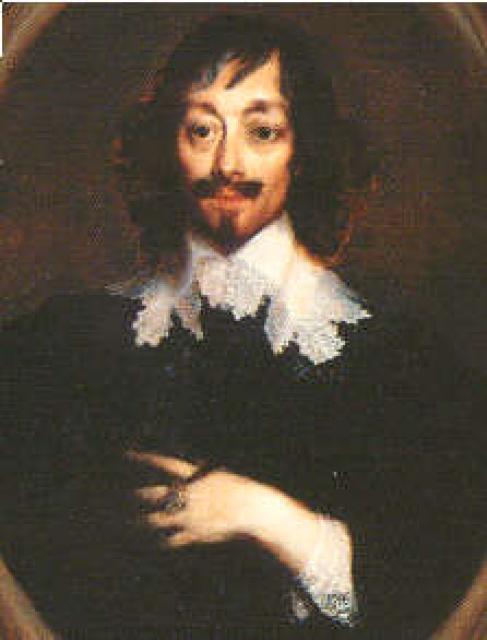
Jacob van Eyck was a renowned Dutch composer, blockflute and carillon player, as well as a nobleman. He was one of the most famous musicians in the Netherlands during the 17th century, excelling in playing the carillon, understanding bell systems, and working with organs.
Early Life
Jacob van Eyck was born into a noble family in the town of Heusden. He was blind from birth. In 1625, he left his hometown and moved to Utrecht, where he became a carillon player at the local cathedral. By 1628, Jacob was the director of all the carillons in Utrecht. His expertise in acoustics impressed prominent scholars such as René Descartes and Isaac Beeckman. Van Eyck also taught bell-ringers in Utrecht. In 1631, he even ordered a small keyboard with thirty bells for practice at home and teaching his students. In January 1632, Jacob was appointed the chief carillonist at St. John's Church.
Contributions and Innovations
Van Eyck studied the instrument offered to him and began to improve it. In September 1633, he revealed some of his bell-related secrets to the Dutch scientist Isaac Beeckman. Van Eyck was extremely knowledgeable about bells and understood how their shape influenced their sound. In 1638, Jacob traveled to Amersfoort, where he was asked to repair a local organ. René Descartes later wrote in a letter to the famous French music theorist Marin Mersenne that van Eyck studied the instrument without touching it, using whistling to carefully listen to the bell's echo. This technique was also mentioned by Constantijn Huygens and Joan Albert Ban.
Later Years and Achievements
In 1640, Jacob was hired to inspect another organ at St. Jacob's Church. In July, he became a member of the commission for selecting organists and carillonists in Hertogenbosch. In 1642, van Eyck tuned the bells at St. Nicholas Church, and in January, he was called to Hertogenbosch for the same purpose. He returned to the city in the fall, as the authorities ordered a new carillon and entrusted its installation to the best available specialist – Jacob van Eyck. Jan Baptist Verrijt arrived in Utrecht from Hertogenbosch later. He was to become the city's organist but only after training under van Eyck.
Apart from his work with bells and organs, Jacob was also a skilled blockflute player. His compositions for the flute were recorded by one of his acquaintances and released as a two-volume collection called 'Der Fluyten Lust-hof' – 'The Flute's Pleasure Garden'. Jacob sent a copy of the first volume to Constantijn Huygens, his distant relative and one of the most influential people in the Dutch Republic at that time. In 1645, van Eyck was appointed the chief carillonist at St. Jacob's Church and the city hall.
In 1646, the second volume of 'The Flute's Pleasure Garden' was published. Shortly after, Jacob traveled to Deventer to inspect another carillon. He did not like the instrument, considering it too light, and his opinion was taken into account. A new carillon was commissioned. In 1649, 'The Flute's Pleasure Garden' was reprinted in a significantly expanded format. The administration of St. John's Church increased Jacob's salary by a quarter on the condition that he would perform with his blockflute in the evenings.
Legacy
Jacob van Eyck passed away on March 26, 1657. In his memory, bells in three nearby churches rang continuously for three hours.