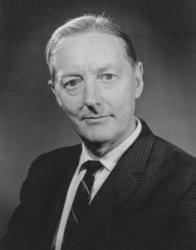
Jacobus Kapteyn
 Netherlands
- Jacobus Cornelius Kapteyn: A Pioneer in Galactic Astronomy
- Stellar Contributions
- Observational Discoveries
- Statistical Analysis
- Kapteyn's Universe Model
- Legacy and Recognition
Jacobus Cornelius Kapteyn: A Pioneer in Galactic Astronomy
Early Life and EducationJacobus Cornelius Kapteyn was born on January 19, 1851, in Barneveld, Netherlands. He pursued his academic career at Utrecht University in 1868, where he obtained his doctorate in 1875.
Stellar Contributions
Kapteyn made significant contributions to our understanding of the Milky Way galaxy. In 1896, he embarked on a collaboration with David Gill to analyze photographic plates of the southern hemisphere stars, resulting in the "Cape Photographic Durchmusterung" catalog. During this work, he discovered Kapteyn's Star, the star with the largest proper motion known at the time (second only to Barnard's Star today).
Observational Discoveries
In 1904, Kapteyn noted non-random patterns in the proper motion of stars, identifying two streams moving in nearly opposite directions. This observation provided the first evidence of the rotation of our galaxy, a concept later confirmed by astronomers Jan Oort and Bertil Lindblad.
Statistical Analysis
In 1906, Kapteyn initiated a groundbreaking project to determine the distribution of stars in the Milky Way. He collected data on star counts, brightness, spectral types, radial velocities, and proper motions in 206 selected zones. This comprehensive statistical analysis, involving the collaboration of over 40 observatories, was the first of its kind in astronomy.
Kapteyn's Universe Model
Kapteyn's magnum opus, published in 1922, presented his "First attempt at a theory of the arrangement and motion of the sidereal system." This theory proposed a lens-shaped "island universe" with decreasing density from the center, known as Kapteyn's Universe model. He estimated the galaxy's diameter at approximately 40,000 light-years and placed the Sun relatively close to the galactic center, at about 2,000 light-years.
Legacy and Recognition
Kapteyn's legacy lives on in the Jacobus Kapteyn Telescope, named in his honor. The Kapteyn Astronomical Institute at the University of Groningen, as well as a street in Groningen (J.C. Kapteynlaan), bear his name. The star BD −45° 1841, moving at 245 km/s, is also known as Kapteyn's Star in tribute to his contributions.