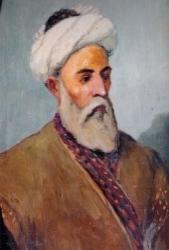
Jacques de Cassan
 France
Jacques de Cassan was a French lawyer and historical writer whose books turned the past into an argument for royal power. Working in Languedoc during the reign of Louis XIII, he wrote about the region’s antiquity and France’s dynastic claims, while serving the crown in the courts. The details of his private life are scarce, but his surviving works show how early modern legal scholarship could also serve political ambition.
A Career in Languedoc
Cassan was born in Toulouse around 1590; both his birth and death dates are uncertain. He pursued a legal career in the south of France, becoming a royal advocate and later a counselor, then first advocate, at the presidial court of Béziers. Alongside his legal work, he wrote histories that connected the region and the French monarchy to distant antiquity.
His 1617 Panégyrique, or Discourse on the Antiquity and Excellence of Languedoc, praised the region’s long history. In 1621, he published Les Dynasties, a survey of ancient Gallic and Frankish kings reaching back to the legendary past and ending with Merovech. These books reflect a period when historical writing was closely tied to questions of prestige, authority and political identity.
History in the Service of the Crown
Cassan’s best-known work, La Recherche des droicts du Roy et de la Couronne de France, appeared in 1632. It examined claims the French crown might assert over territories held by neighboring princes, grounding them in conquest, inheritance, purchase, donation and older feudal rights. The book addressed possessions and titles beyond the kingdom’s settled borders, including claims associated with Catalonia and the Holy Roman Empire.
Cassan was among the political lawyers associated with Cardinal Richelieu’s government. His argument was not neutral history: it organized medieval precedents to make contemporary expansionist claims appear legally defensible. A modern scholarly account describes his method as bold and his use of history as instrumental. His work therefore offers a revealing glimpse into the legal language through which seventeenth-century rulers pursued power while presenting territorial ambition as inherited right.
Legacy
Cassan’s name is less familiar today than those of the statesmen whose policies his books supported. Yet his writing remains useful to historians studying the relationship between law, memory and monarchy. The Panégyrique preserves an early-modern vision of Languedoc’s past, while La Recherche shows how lawyers could shape historical narratives into tools of diplomacy and statecraft.