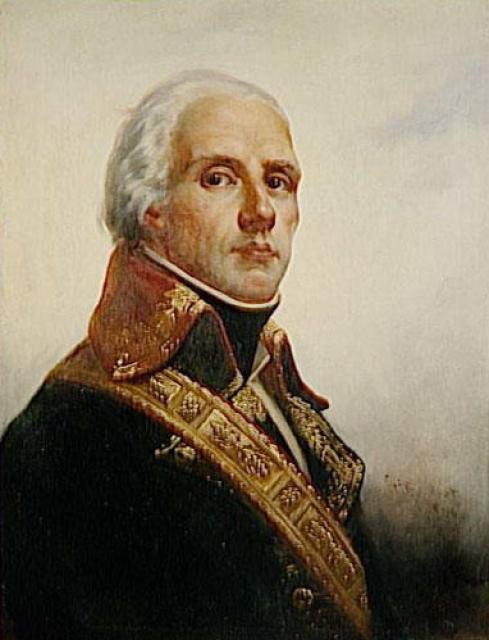
Jacques Francois Dugommier
 France
- Early Life and Military Career
- Return to Guadeloupe
- The Revolutionary Wars
- Command of the Italian Army
- Command of the Army of the Eastern Pyrenees
- Legacy
Early Life and Military Career
Jacques François Dugommier was born on August 1, 1738, on the Caribbean island of Guadeloupe to a wealthy plantation family. He embarked on a military career at a young age, joining the colonial Royal Army in 1759. During the Seven Years' War, he fought against British forces in Guadeloupe (1759) and Martinique (1762).
Return to Guadeloupe
After 25 years of service, Dugommier retired to his family's estate in Guadeloupe in 1784. He adopted the surname Dugommier and managed his plantations for the next five years.
The Revolutionary Wars
The French Revolution brought Dugommier back to active duty. He commanded the National Guard of Martinique and courageously defended Saint-Pierre against British attacks. However, unable to prevent the British capture of the island, he traveled to France in 1792 and successfully convinced the government to support the colonies.
Command of the Italian Army
Promoted to Brigadier General, Dugommier joined the Italian Army. He quickly impressed the National Convention and was promoted to Divisional General. In 1793, he assumed command of the army tasked with besieging British-occupied Toulon. Following Napoleon Bonaparte's strategic plan, Dugommier recaptured Toulon for France in December 1793.
Command of the Army of the Eastern Pyrenees
In 1794, Dugommier was appointed commander of the Army of the Eastern Pyrenees. He successfully fought against Spanish forces, liberating French territory. However, he was severely wounded during the capture of Fort Saint-Elme and died in action at the Battle of San Sebastian on November 18, 1794.
Legacy
Jacques François Dugommier was a courageous general who opposed the Reign of Terror and refused to obey orders not to take prisoners. His name is inscribed on the Arc de Triomphe in Paris, honoring his military achievements during the Revolutionary Wars.


