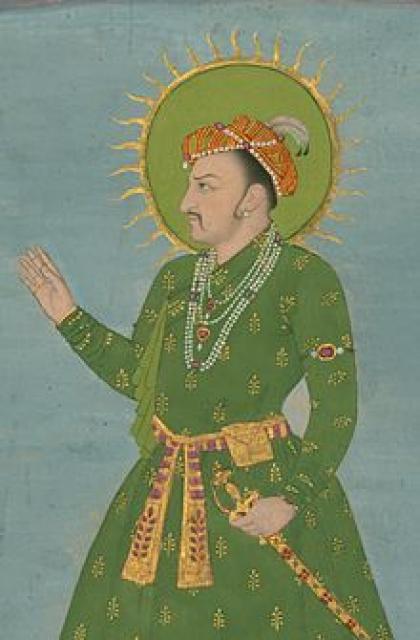
Jahangir
- Jahangir: The Fourth Mughal Emperor
- Accession and Internal Strife
- Deccan Wars
- Siege of Kandahar and Later Reign
- Personality and Cultural Pursuits
- Family and Legacy
Jahangir: The Fourth Mughal Emperor
Early Life and ConflictsJahangir, born as Sultan Salim Bahādur in 1569, was the third son of Mughal Emperor Akbar. He spent his early years in and around Allahabad, exhibiting independence and challenging Akbar's authority. In 1602, he conspired with Bir Singh Deo, a Rajput chieftain, to assassinate Akbar's trusted aide, Abul Fazl. This act led him to fall out with Akbar and flee the Mughal camp.
Accession and Internal Strife
Following Akbar's death in 1605, Jahangir ascended to the throne in Agra. His accession was marred by a series of internal conflicts. His son, Prince Khusrau Mirza, rebelled in 1606, attempting to seize power. After suppressing the rebellion, Jahangir had Khusrau blinded to prevent further challenges. Other conflicts included suppressing revolts in Rajputana and Bengal.
Deccan Wars
Jahangir faced numerous campaigns in the Deccan region of India. He sought to conquer the independent sultanates of Ahmadnagar, Bijapur, and Golconda. The Mughal armies initially succeeded in capturing and ransacking Ahmednagar in 1620, forcing its ruler, Malik Ambar, to submit. However, the ongoing Deccan wars weakened Mughal defenses in the west.
Siege of Kandahar and Later Reign
In 1621, Kandahar fell to Safavid forces, straining relations between the Mughal and Safavid empires. Jahangir's later reign was marked by frequent rebellions and power struggles. His favorite wife, Nur Jahan, exerted significant influence over the court, which led to tensions with Rajput factions. In 1625, Mahabat Khan, a powerful Rajput general, revolted and briefly captured Jahangir, but the emperor regained control the following year.
Personality and Cultural Pursuits
Jahangir had a reputation for being a hedonist, enjoying women, alcohol, and drugs. He was also a discerning patron of the arts, supporting the development of Mughal painting and literature. His own memoir, "Jahangir-nama," is a rich and vibrant account of his reign and his interests. Despite his indulgences, Jahangir was known for his intellectual curiosities and a keen eye for detail.
Family and Legacy
Jahangir's marriages resulted in seven sons and 14 daughters. His son, Shah Jahan I, succeeded him as the Mughal emperor and is known for constructing the iconic Taj Mahal. Jahangir died in 1627, leaving behind a complex legacy as a ruler who expanded the Mughal Empire, but also struggled with internal conflicts and personal demons.