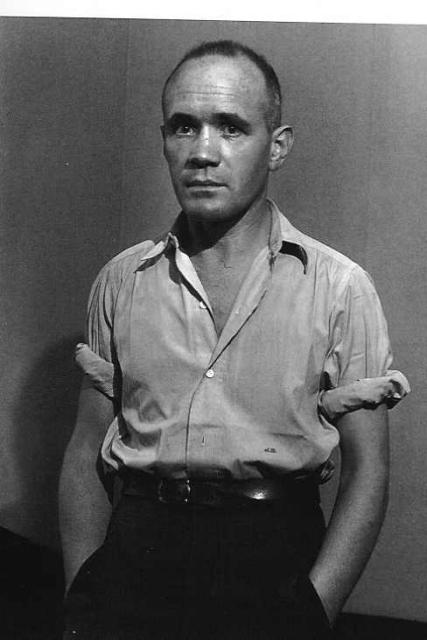
Jahn Jene
 France
- Jean Genet: A Tumultuous Life in Literature and Politics
- Youthful Delinquency and Prison
- Literary Debut and "Our Lady of the Flowers"
- Recognition and Collaboration with Sartre and Cocteau
- Theatre and the Theatre of the Absurd
- Political Activism and Solidarity with the Oppressed
- Later Years and Literary Silence
- Legacy and Impact
Jean Genet: A Tumultuous Life in Literature and Politics
Early Life and Childhood HardshipsJean Genet was born on December 19, 1910, in Paris. Abandoned by his mother shortly after birth, he was raised by a foster family in the town of Alligny-en-Morvan. Genet's childhood was marked by poverty and a strict Catholic upbringing, which left him with a complex sense of morality.
Youthful Delinquency and Prison
In his early teens, Genet began stealing from his foster parents and was sent to a reformatory school. He later spent several years in and out of prison for various offenses, including theft and vagrancy. During this time, he developed a fascination with the world of crime and the marginalized.
Literary Debut and "Our Lady of the Flowers"
In 1942, while serving a prison sentence for stealing a book by Marcel Proust, Genet began writing his first novel, "Our Lady of the Flowers." The novel, which drew inspiration from Proust's "In Search of Lost Time," explored themes of homosexuality, criminality, and spirituality.
Recognition and Collaboration with Sartre and Cocteau
After the war, Genet's literary talents were recognized by influential figures such as Jean-Paul Sartre and Jean Cocteau. Cocteau defended Genet during a trial for theft, calling him "the most significant writer of our time." Sartre wrote an extensive introduction to Genet's collected works, cementing his status as a major literary figure.
Theatre and the Theatre of the Absurd
In the 1950s, Genet turned his attention to the theater. His plays, such as "The Balcony," "The Blacks," and "The Screens," explored themes of societal hypocrisy, racism, and the search for identity. Genet's work became associated with the Theatre of the Absurd alongside writers like Samuel Beckett and Eugène Ionesco.
Political Activism and Solidarity with the Oppressed
In the 1960s and 1970s, Genet became increasingly involved in political activism. He supported the Black Panthers in the United States, denounced the Vietnam War, and advocated for the Palestinian cause. His political involvement often drew controversy, but he never shied away from speaking out against injustice.
Later Years and Literary Silence
After a near-fatal illness in 1979, Genet spent his remaining years in Morocco, where he completed his final novel, "The Prisoner of Love." He died in Paris on April 15, 1986, at the age of 75.
Legacy and Impact
Jean Genet's literary and political legacy continues to resonate today. His writings on homosexuality, criminality, and the search for identity have had a profound influence on subsequent generations of writers and thinkers. Genet's activism and solidarity with the oppressed have inspired countless people to fight for social justice. He remains a complex and enigmatic figure, whose life and work continue to provoke and fascinate.