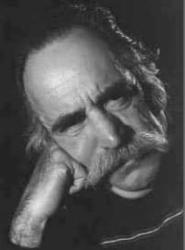
Jahn Moliere
 France
Biography of Jean Molière
Jean Molière, the great French playwright and actor, was a close associate of the monarch and was required to adhere to all the etiquette rules of the royal court, including the dietary regime. However, Molière's weak health was further compromised by his indulgence in the rich "royal cuisine."
At the age of forty, Molière fell ill with a "stomach catarrh," a condition known today as stomach ulcers. Severe abdominal pain accompanied by weakness and depression plagued him. These mood swings were also influenced by personal reasons, as Molière was painfully jealous of his young wife's social admirers. The doctors diagnosed him with "stomach catarrh and acute hypochondria."
Concerned about Molière's health, the king summoned the most experienced and enlightened doctors for consultation and treatment. They recognized that the illness was caused not only by his diet but also by his mood and prescribed a milk and vegetable diet, complete rest, and solitary walks in fresh air. Molière moved to the outskirts of Paris and consumed only dairy products, vegetables, and fruits. The diet consisted mainly of mild young cheeses and sour milk. His health quickly improved.
After the prescribed diet for his stomach problems, Molière's frequent episodes of hemoptysis, then referred to as tuberculosis, also ceased to torment him. However, upon returning to Paris, he broke the diet, returning to "royal meat" and spicy sauces. The results of the treatment were short-lived, and his health deteriorated once again. Molière died relatively young. According to his faithful friend, "a vein in his chest burst, and blood gushed from his throat." This happened after the performance of "The Imaginary Invalid," in which Molière played the lead role. During the performance, he experienced a severe attack but did not leave the stage, as the actors would not receive payment for their work if the show was canceled. Grateful actors carried Molière home and called for doctors, but they refused to come, offended by his plays in which doctors were the target of scathing attacks. Interestingly, even the priest refused to administer the last sacrament because after the play "Don Juan," the Church considered Molière an irreligious man. However, the treatment that Molière repeatedly sought, the milk and vegetable diet, and walks in fresh air prescribed by Louis XIV's doctors undoubtedly prolonged his life and were quite progressive. After all, the overall level of medicine in the seventeenth century was extremely low. Doctors only possessed two methods of treatment. Graduates of the Medical Faculty of the Sorbonne, the only educational institution where students acquired medical knowledge, administered enemas to the sick and prescribed frequent bloodletting. All diseases were diagnosed solely based on the appearance of urine. The actual diagnosis was not important, as traditional treatment remained the same - enemas and bloodletting. In fairness, it should be noted that French doctors also believed in a broth elixir, which was popular among ladies. They believed that a nourishing meat broth with fresh herbs, roots, and a portion of chocolate added to it helped restore strength and overcome "physical weakness."
In his plays "The Hypochondriac" and "The Imaginary Invalid," Molière satirized medicine and depicted doctors as purely comedic characters. Against the backdrop of the infantilism of medical thought, the diet recommended to Molière was an innovation, and the playwright himself, in a sense, became one of the first patients to try out progressive treatment methods. King Louis XIV also encountered a new medical term himself. He suffered from painful hemorrhoids, a condition that afflicted almost all men in the seventeenth century due to constant horseback riding. Louis XIV experienced the first signs of this unpleasant illness in his youth. By middle age, his hemorrhoids had become chronically acute, and a suppurative fistula had developed on the hemorrhoidal lump. At that point, Louis, prepared for the worst outcome, requested surgical excision of the abscess. Resection of the hemorrhoidal lump, one of the most excruciating operations, was performed directly in the royal palace without anesthesia, which was unknown in the medicine of that time. The courageous and resilient king astonished everyone with his bravery, as he did not utter a sound during the operation. The surgery was successful. Thus, the first operation for the removal of hemorrhoids was tested on a monarch. Subsequently, the surgical method of combating hemorrhoids quickly spread not only throughout France but also around the world. After the operation, Louis XIV lived for another twenty years.