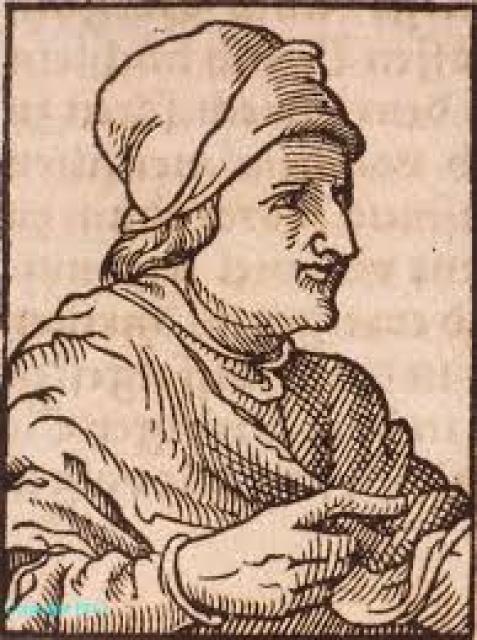
Jakob Wimpfeling
 Germany
- Biography of Jakob Wimpfeling
- Education and Career
- Move to Strasbourg
- Contributions to German Historiography
- Later Life and Legacy
Biography of Jakob Wimpfeling
Jakob Wimpfeling was a German humanist and the leading representative of the Strasbourg Circle of Humanists. He was born in 1450 in Schlettstadt, Alsace, which was then part of the Holy Roman Empire.
Education and Career
Wimpfeling began his education at the University of Basel, where he studied the classics, philosophy, and theology. He obtained his Bachelor's degree in 1466 and continued his studies at the University of Freiburg. In 1471, he became a professor at the University of Heidelberg, where he taught for thirty years.
During his time in Heidelberg, Wimpfeling became known for his humanistic writings and his dedication to education. He believed in the importance of classical education and the study of ancient texts, which he believed could improve both individuals and society as a whole. He wrote numerous humanistic works, including "Guide to Germany" (1497), "Youth" (1500), and "Shackles" (1520).
Move to Strasbourg
In 1501, Wimpfeling left Heidelberg and moved to Strasbourg, where he continued his intellectual pursuits. He became a prominent figure in the Strasbourg Circle of Humanists, a group of scholars who were dedicated to the study of classical literature, history, and philosophy. Wimpfeling's presence in Strasbourg helped to establish the city as a center of humanistic learning.
Contributions to German Historiography
One of Wimpfeling's most significant contributions was his work in German historiography. In 1505, he published "Germany," an important historical work that provided a comprehensive overview of German history up to that time. This was the first major work of German historiography and helped to establish a foundation for the study of German history.
Wimpfeling also wrote "An Outline of German History" in 1505, which provided a concise summary of German history for educational purposes. This work was widely used in schools and helped to popularize the study of history among the general population.
Later Life and Legacy
In his later years, Wimpfeling returned to Schlettstadt, where he continued his scholarly pursuits. He remained an active writer and educator until his death in 1528.
Jakob Wimpfeling's contributions to German humanism and historiography were significant. His writings and teachings helped to promote the study of classical literature and history in Germany, and his works provided a foundation for future scholars in these fields. Wimpfeling's dedication to education and his belief in the power of knowledge continue to inspire scholars and students to this day.