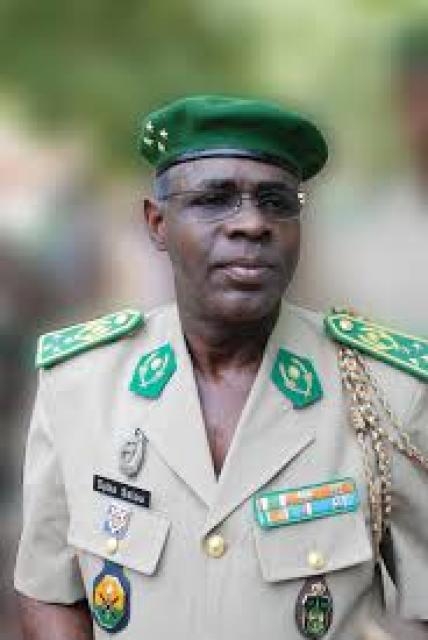
Salou Djibo
 Nigeria
- Early Life and Military Education
- Leadership in Peacekeeping Operations
- The 2010 Coup and Takeover
- Interim President and Transitional Period
- Constitutional Reforms and Anti-Corruption Measures
- Attempted Countercoup and Transfer of Power
- Retirement and Post-Presidency
Early Life and Military Education
Salou Djibo was born in Namaro, 40 kilometers from Niger's capital city. A member of the Djerma ethnic group, he received military training in Ivory Coast, Morocco, and China.
Leadership in Peacekeeping Operations
Djibo served in United Nations peacekeeping missions in Ivory Coast and the Democratic Republic of the Congo. In 2005, he became the commander of the 121st Support Battalion of the Niger Armed Forces, a special forces unit involved in previous coups d'état.
The 2010 Coup and Takeover
As commander of the "1st Military Zone," Djibo controlled 40% of the armed forces. On February 18, 2010, he led a military coup that ousted authoritarian President Mamadou Tandja. The coup was widely supported in Niger.
Interim President and Transitional Period
Initially considering holding power for 2-3 years, Djibo established a military junta called the Supreme Council for the Restoration of Democracy. Under international pressure, he announced a one-year transition period to hand over power by 2011. A civilian government was formed under the supervision of the military council.
Constitutional Reforms and Anti-Corruption Measures
In April 2010, Djibo formed a commission to draft a new constitution. He also established a National Consultative Council as a temporary parliament. The proposed constitution introduced a semi-presidential system, shifting power from the president to the parliament. To combat corruption, Djibo dismissed the heads of 20 state-owned companies and created a financial inspectorate to investigate the previous government.
Attempted Countercoup and Transfer of Power
In October 2010, a coup attempt was foiled. Several high-ranking officers were arrested, including Colonel Abdoulaye Badié, the second-in-command of the junta. On April 7, 2011, Djibo handed over power to democratically elected President Mahamadou Issoufou.
Retirement and Post-Presidency
After retiring in May 2011, Djibo was promoted to Army General. He currently holds a position in the Economic Community of West African States (ECOWAS).