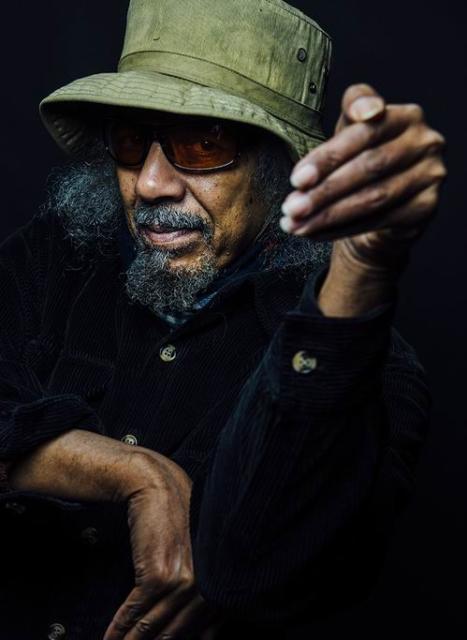
Jalal Mansur Nuriddin
 USA
USA- Early Life and Activism
- Literary Beginnings
- The Last Poets
- Solo Career and Hustlers Convention
- Later Collaborations and Legacy
- Return to the US and Autobiography
- Passing and Legacy
Early Life and Activism
Jalal Mansur Nuriddinwas born in Brooklyn, New York in July 1944. As a devout Muslim and practitioner of the White Blood (Bak Mei) style of kung fu, he adopted the alias "Lightning Rod." Nuriddin's activism against systemic oppression led to his imprisonment, from which he was released on the condition that he join the U.S. Army and undergo paratrooper training. However, his refusal to salute the American flag resulted in a second incarceration.
Literary Beginnings
Despite his confrontations with authority, Nuriddin earned an honorable discharge from the military and briefly worked on Wall Street. It was there that he wrote the poem "E-Pluribus Unum," which was later featured on The Last Poets' 1973 album, "Chastisement." Nuriddin embraced the emerging form of rap, which he labeled "spoagraphics," incorporating rhythmic "spoken word" poetry and the percussive handclapping of African-American prisoners into his performances.
The Last Poets
Nuriddin was part of the original lineup of The Last Poets, alongside Gylan Kain, David Nelson, and Felipe Luciano. However, he left before the release of their soundtrack album for the documentary "Right On" in 1967. Subsequently, he, Umar Bin Hassan, and percussionist N'inja released the albums "The Last Poets" (1969) and "This Is Madness" (1970). His pseudonym at this time was Alafia Pudim, which was later replaced with the Arabic Jalaluddin Mansur Nuriddin (meaning "glory of religion," "victorious," and "light of faith").
Solo Career and Hustlers Convention
Under the alias Lightning Rod, Nuriddin released the influential 1973 album "Hustlers Convention." Its tracks depicted the harsh realities of ghetto life, including hustling, drugs, gambling, and violence. In contrast to his socially conscious lyrics, Nuriddin's style was characterized by its rhythmic flow and virtuoso wordplay.
Later Collaborations and Legacy
In the late 1990s, Nuriddin reunited with The Last Poets and performed cameo roles in John Singleton's film "Poetic Justice." He also contributed to Adrian Sherwood's album and single "Mankind, Pt. 2," which was featured in the film "187."
Return to the US and Autobiography
After living in Europe for several years, Nuriddin returned to the US in 2009. He spent his final years in Georgia, working on his autobiography, which was entirely written in verse. In 2014, he toured the UK with the program from "Hustlers Convention," widely acknowledged as the first rap record.
Passing and Legacy
Jalal Mansur Nuriddin passed away on June 4, 2018, after a battle with cancer. His pioneering work in spoken word poetry and rap, his contributions to The Last Poets, and his fearless activism have left an enduring legacy in the world of music and culture.


