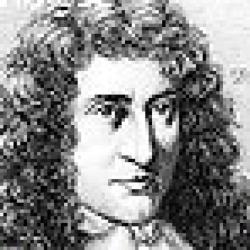
James Dewar
 Great Britain
Biography of James Dewar
James Dewar, a Scottish chemist and physicist, is best known as the inventor of the Dewar flask, commonly known as the thermos. Born in Kincardine-on-Forth, Dewar was the youngest of six children. He became an orphan at the age of 15 and went on to study at the University of Edinburgh under Lord Playfair, becoming his permanent assistant.

In 1875, Dewar obtained a position as a professor of natural philosophy at Cambridge. He later became a member of the Royal Institution and held the distinguished position of professor of chemistry. In 1897, Dewar became the president of the Chemical Society and in 1902, the president of the British Association for the Advancement of Science. Additionally, he served as a member of the Royal Commission for examining London's water supply from 1893 to 1894. Dewar was also a member of the Explosives Committee, where he developed cordite, an alternative to smokeless gunpowder, alongside Frederick Augustus Abel.

Throughout his career, Dewar conducted research in various fields including organic chemistry, properties of hydrogen, high-temperature chemistry, physics, solar temperature, electric sparks, electro-photometry, and chemical properties of electric arcs. He is most famously associated with his experiments on liquefying "ideal gases" and working with temperatures close to absolute zero, which he began in 1874. In 1885, he demonstrated the world's first public experiment on liquefying oxygen and air. Soon after, he built a machine that allowed the use of liquefied gases for cooling purposes. Liquid oxygen found applications in various meteorite studies. Dewar eventually succeeded in obtaining solid oxygen.
By 1891, Dewar was able to produce liquid oxygen on an industrial scale and by the end of the year, he demonstrated that both oxygen and ozone in liquid form were noticeably affected by magnetic radiation. In 1892, he came up with the idea of using a special vessel with an internal vacuum shell for storing liquefied gases, known as the Dewar flask, or simply, the thermos. This invention brought Dewar considerable fame as it proved to be remarkably efficient in preserving liquids for extended periods, facilitating the study of their properties. Unfortunately, Dewar did not profit commercially from his invention as he lost the patent case against "Thermos L.L.C." The court recognized him as the inventor but the lack of an official patent prevented him from prohibiting "Thermos" from using his invention for their purposes.
In 1905, Dewar turned his attention to the study of the adsorption properties of cooled coal, which later played a significant role in the development of atomic physics. He continued experimenting with the properties of various cooled substances until the start of World War I. The war greatly affected scientific research and Dewar chose not to restart his experiments after its conclusion.