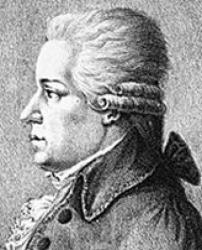
James Horner
 USA
USA- Biography of James Horner
- Early Years and Education
- Entry into Film Composition
- Breakthrough and Success
- Oscar Success and Recognition
- Collaboration with James Cameron and Other Projects
- Later Career and Tragic Accident
- Legacy
Biography of James Horner
James Roy Horner was an American film composer and conductor. He was born on August 14, 1953, in Los Angeles, California, into a Jewish family. His father, Harry Horner, was a set designer and occasionally worked as an art director. His brother, Christopher Horner, is a writer and documentary filmmaker.

Early Years and Education
Horner began learning the piano at the age of five. He spent his early years in London, where he studied at the Royal College of Music. After returning to the United States, he earned a bachelor's degree in music from the University of Southern California. He then pursued a master's degree and began working on his doctoral dissertation at the University of California, Los Angeles (UCLA) with Paul Chihara.

Entry into Film Composition
Horner started his career by completing several musical commissions for the American Film Institute in the 1970s. He then decided to focus on composing music for films and left his position as a music theory lecturer at UCLA. He initially worked on low-budget movies but soon gained attention in Hollywood and began working on major projects.

Breakthrough and Success
Horner's first significant breakthrough came in 1982 when he composed the music for Nicholas Meyer's film "Star Trek II: The Wrath of Khan." Despite Meyer's sarcastic comment about hiring Horner due to budget constraints, the collaboration proved successful, and Horner's career took off. He went on to compose music for notable films of the 1980s, including "Aliens," "Willow," and "Glory."

Oscar Success and Recognition
Horner received his first Academy Award nomination for Best Original Score for James Cameron's "Aliens." He went on to receive several more nominations for his work on films such as "Braveheart" and "Apollo 13." However, Horner's most significant commercial and critical success came with his composition for Cameron's romantic blockbuster, "Titanic." The film's soundtrack became the best-selling album in its genre, and the song "My Heart Will Go On," co-written by Horner, won him an Oscar.
Collaboration with James Cameron and Other Projects
Despite claiming that he would never work with Cameron again after the challenging experience of scoring "Aliens," Horner reunited with the director a decade later for the film "Avatar." The film became the highest-grossing film of all time, and Horner spent over two years composing the music for it, turning down all other projects during that period. He also composed music for films like "The Perfect Storm," "A Beautiful Mind," and "Enemy at the Gates."
Later Career and Tragic Accident
In the early 2010s, Horner worked on films such as "The Karate Kid" and "The Amazing Spider-Man." However, he declined to compose for the sequel, stating his dissatisfaction with the film. In 2015, he composed music for films like "Wolf Totem," "The 33," and "Southpaw." Tragically, on June 22, 2015, Horner died in a plane crash near Ventucopa, Santa Barbara, California. His death was mourned by the music industry, with his assistant describing him as a talented and dedicated individual.
Legacy
Throughout his career, James Horner was nominated for a total of ten Academy Awards, including for films like "Field of Dreams" and "An American Tail." He left a lasting impact on the world of film music with his unique integration of choral and electronic elements and his ability to capture the emotions of a story through his compositions.