James Lovelock
 Great Britain
- Early Life and Education
- Scientific Breakthroughs
- Academia and NASA
- The Gaia Hypothesis
- Controversies and Legacy
- Later Work
Early Life and Education
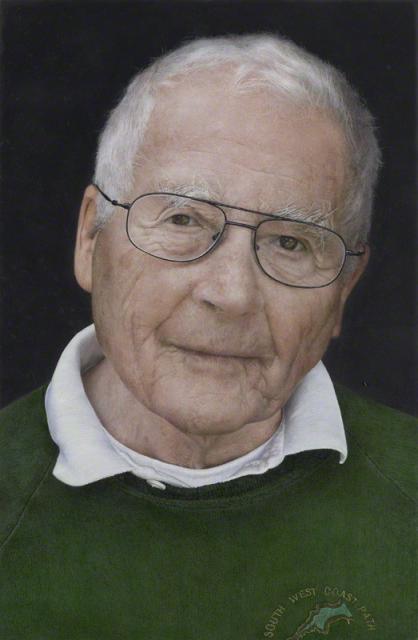
James Lovelock, a renowned British scientist, was born in Letchworth, England. In 1954, the Rockefeller Travelling Fellowship allowed him to pursue medical research at Harvard Medical School in Boston. He later earned a degree in biophysics from the University of London in 1959.
Scientific Breakthroughs
Electron Capture Detector:In 1957, Lovelock invented an electron capture detector for gas chromatography, which had a high sensitivity to environmental pollutants. This discovery led to the realization of the widespread presence of pesticide residues in nature.
Chlorofluorocarbons (CFCs) in the Atmosphere:In 1966, Lovelock detected CFCs in the atmosphere using his electron capture detector. This discovery played a crucial role in the development of greenhouse effect theory.
Academia and NASA
Baylor University College of Medicine:In 1961, Lovelock became a professor of chemistry at Baylor University College of Medicine in Texas, a position he held until 1964.
Jet Propulsion Laboratory (JPL):NASA invited Lovelock to join their scientific team at JPL in 1961, where he worked on developing probes for lunar and planetary research. He also contributed to NASA's search for life on Mars.
The Gaia Hypothesis
Entropy Analysis:While working at NASA, Lovelock sought to develop methods for detecting life on extraterrestrial planets. His entropy analysis proposed that a non-living planet's atmosphere would eventually reach chemical equilibrium, whereas a living planet's atmosphere would exhibit disequilibrium due to life's metabolic processes.
The Earth as a Living System:Inspired by William Golding's suggestion, Lovelock named his theory the Gaia Hypothesis (later referred to as Gaia Theory). This theory proposed that the Earth's atmosphere and biosphere interacted to maintain a stable environment suitable for life.
Controversies and Legacy
NASA Rejection:Initially, NASA rejected Gaia Theory as it contradicted the premise of the Martian life search program. However, in the 1970s, evidence emerged in support of the theory.
Critic of Environmentalism:Lovelock was a critic of certain environmental organizations, arguing that their focus on preserving individual species ignored the overall interconnectedness of the Earth's systems.
Advocate for Nuclear Energy:As an advocate for using nuclear energy, Lovelock believed that it could provide a clean and sustainable alternative to fossil fuels.
Later Work
Association for Marine Biology:In 1982, Lovelock became involved with the Association for Marine Biology, serving as president from 1986 to 1990.
Current Activities:Lovelock, now in his 90s, continues to write and lecture on environmental issues, including climate change and sustainable living.