James Marape
- From the Highlands to university
- Building a political career
- Prime minister and national agenda
- A continuing public life
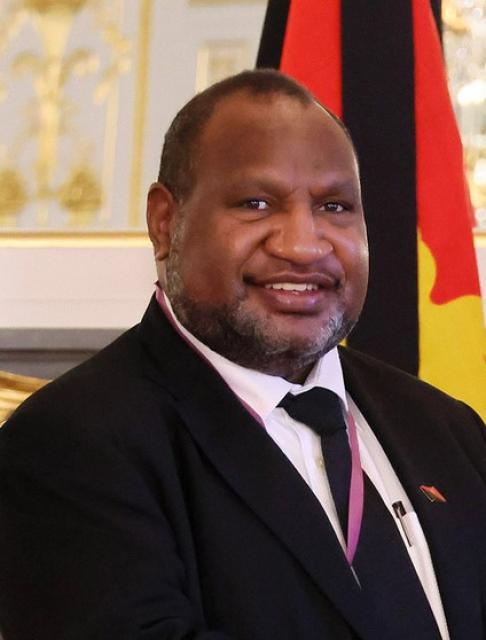
James Marape (born 24 April 1971) is a Papua New Guinean politician who has served as the country’s prime minister since 2019. A member of the Huli people and representative of the Tari-Pori electorate, he rose from public service and provincial work to senior cabinet roles, including education and finance, before becoming head of government. Re-elected in 2022, he remains in office as of 2026.
From the Highlands to university
Marape was born and grew up in Papua New Guinea’s Highlands region. He attended Minj Primary School and Kabiufa Adventist Secondary School, then studied at the University of Papua New Guinea. He earned a Bachelor of Arts degree in 1993, postgraduate honors in environmental science in 2000 and an MBA.
Before entering parliament, he worked in several roles connected with development and public administration. He was officer in charge at the Papua New Guinea Institute of Medical Research’s Tari branch in 1994–95, worked as an operations manager at the Hides gas project and later served in the Department of Personnel Management. In public accounts of his childhood and student years, he has described taking on paid work to help support himself and his family.
Building a political career
Marape first contested the Tari-Pori seat in 2002 and was elected to the National Parliament in 2007. He initially represented the National Alliance Party and later joined the People’s National Congress. From 2008 to 2011, he served as minister for education in the government of Michael Somare. After re-election in 2012, he became minister for finance under Peter O’Neill, a portfolio he held for much of the following seven years.
In April 2019, Marape resigned as finance minister, citing a loss of trust and disagreements over policy. The move came amid a period of political turmoil in Port Moresby. After O’Neill resigned, parliament elected Marape prime minister on 30 May 2019. He subsequently joined Pangu Pati, building a governing coalition around a platform that emphasized national sovereignty and a larger share of benefits from Papua New Guinea’s natural resources.
Prime minister and national agenda
Marape was re-elected by parliament in August 2022 after the general election, and his government continued with a second term. His administration has promoted a “Take Back PNG” message and the goal of making development reach communities beyond major urban centers. Its stated priorities have included education, transport links, healthcare, agriculture, and securing greater benefits for Papua New Guineans from mining, petroleum and other resource projects.
That agenda has unfolded amid significant economic and social challenges, including infrastructure gaps, pressure on household costs, and law-and-order concerns. The government has pursued large resource projects and programs to connect remote districts to markets and services, while Marape has regularly framed economic growth as a means to improve opportunities for ordinary citizens. As prime minister, he has also represented Papua New Guinea in regional and international forums, including a 2023 address to the Australian Parliament that made him the first Pacific Islands leader to speak there.
A continuing public life
Marape’s political story is closely tied to his home electorate and to the broader ambitions of a country balancing resource development with the needs of a widely dispersed population. His path through education, public administration, cabinet and parliament reflects that connection. As of 2026, he continues to lead Papua New Guinea, with the results of his government’s development agenda remaining a central subject of public debate.