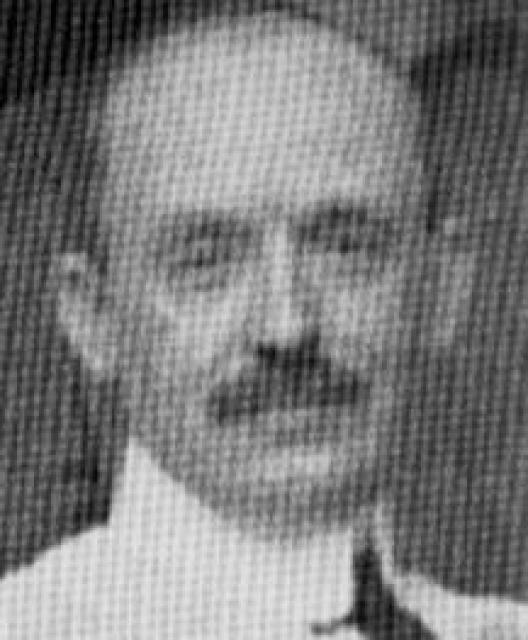
James Williams Gidley
 USA
USA- Early Life and Education
- Museum Career
- Field Research
- Academic Accomplishments
- Notable Publications
- Zoological Classification
Early Life and Education
Born in the United States, the renowned American paleontologist and zoologist attended Princeton University, graduating in 1901. He studied under the esteemed paleontologist, Professor William Berryman Scott.
Museum Career
From 1899, the individual served as an associate at the National Museum of Natural History in New York. In 1905, he joined the Smithsonian Institution in Washington, D.C.
Field Research
Throughout his career, the paleontologist embarked on numerous excavations in the United States and Canada, expanding the understanding of fossil discoveries.
Academic Accomplishments
In 1922, he presented his doctoral thesis, "Paleocene primates of the Fort Union," to George Washington University. Two years later, an expanded version was published as a monograph.
Notable Publications
Among his vast contributions to scientific literature were:- "Evidence bearing on tooth-cusp development" (1907)
- "Revision of the Miocene and Pliocene Equidae of North America" (1907, co-authored with H. F. Osborn)
Zoological Classification
Based on his research, the scientist proposed in 1912 that lagomorphs (e.g., rabbits and hares) should be classified as a distinct order, separate from rodents. This hypothesis challenged the prevailing view that lagomorphs were merely a subgroup of rodents.