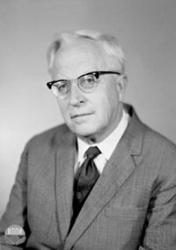
Boris Balinsky
 South Africa
- Early Life and Education
- Academic Achievements and Embryological Contributions
- Personal and Professional Challenges
- Escape from the Soviet Union
- Post-war Career and Influence on African Science
- Legacy and Recognition
Early Life and Education
Boris Ivanovich Balinsky was born on September 10, 1905, in Kiev, Ukraine, to a history teacher and a biology teacher. From a young age, Balinsky had a passion for Ukrainian folk songs and spent his summers in the countryside, where his grandfather sparked his interest in entomology.
Academic Achievements and Embryological Contributions
In 1923, Balinsky enrolled in the Higher Institute of Public Education named after Mikhail Petrovich Dragomanov, where he studied zoology. He published his first scientific article in 1925 and released his monograph "On the Development of the Embryo from the Egg" in 1932. By 1933, he became a professor of embryology and deputy director of the Institute of Zoology at the Ukrainian Academy of Sciences.
Balinsky's groundbreaking research in embryology established him as one of the world's leading embryologists. His work focused on the development of the egg, particularly the role of nucleic acids in embryonic development.
Personal and Professional Challenges
In 1936, Balinsky's wife was arrested for anti-Soviet activities, leading to his dismissal from his position. Despite these setbacks, he managed to continue his research at the Kiev Medical Institute. However, with the outbreak of World War II, the institute evacuated to Kharkov and later to Chelyabinsk, leaving Balinsky behind in occupied Kharkov.
Escape from the Soviet Union
After the Germans retreated, Balinsky fled the Soviet Union with his family. He worked in research institutes and universities throughout Europe, eventually settling in Munich, where he met his second wife, Elizabeth Stengel.
Post-war Career and Influence on African Science
After the war, Balinsky accepted a position at the University of the Witwatersrand in Johannesburg, South Africa. He became the head of the Zoology Department in 1954 and served as dean of the Faculty of Science from 1965 to 1967. Balinsky played a pivotal role in the development of science and higher education in Africa, particularly in the field of electron microscopy.
Legacy and Recognition
Balinsky's contributions to embryology and electron microscopy have earned him international recognition. He published over 100 scientific papers and was a member of several prestigious scientific societies. Balinsky died on September 1, 1997, in Johannesburg, South Africa. His legacy continues to inspire scientists and researchers around the world.