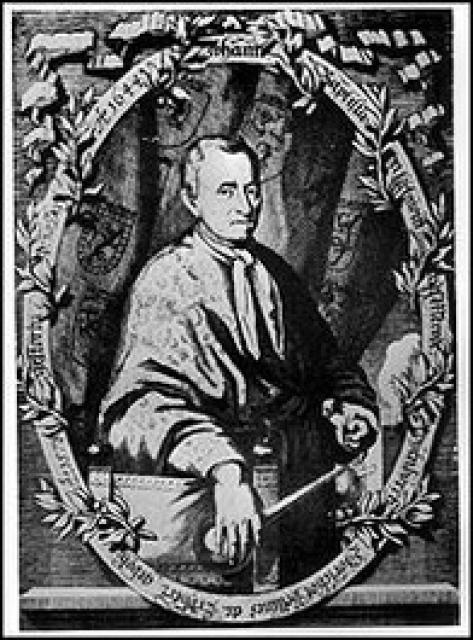
Jan Baptista van Helmont
 Belgium
- A Pioneer of Chemistry, Medicine, and Mysticism
- Travels and Studies
- Marriage and Family
- Chemical Discoveries
- Medical Revolution
- The Tree Experiment
- Digestion and Metabolism
- Influence and Legacy
A Pioneer of Chemistry, Medicine, and Mysticism
Early Life and EducationJan Baptist van Helmont was born in Brussels, Belgium, on January 12, 1579. As the youngest child of a wealthy family, he received a privileged education. However, it was not until he enrolled at the University of Leuven that he found his passion: medicine.
Travels and Studies
After a brief stint at Leuven, van Helmont embarked on a journey through Switzerland, Italy, France, and England. His travels exposed him to diverse medical practices and philosophical ideas. Upon returning to Antwerp in 1605, he witnessed the devastating effects of the plague firsthand.
Marriage and Family
In 1609, van Helmont earned his medical degree and married Margaret van Ranst, a woman of noble descent. They had six or seven children, including Franciscus Mercurius, who later achieved fame as a language physiologist.
Chemical Discoveries
Settling in Vilvoorde, van Helmont dedicated himself to chemistry. He introduced the term "gas" into chemical terminology and conducted groundbreaking experiments on combustion and gas behavior. His pursuit of a universal cure for diseases led him to investigate the role of chemical processes in the body.
Medical Revolution
Challenging the prevailing medical theories of his time, van Helmont developed his own theory of life processes. He proposed the existence of two non-corporeal principles: the "Archeus," a vital force governing bodily functions, and the "Duumvirat," a rational soul residing in the stomach and liver.
The Tree Experiment
Van Helmont's famous experiment involved growing a willow tree in a pot filled with soil. Adding only rainwater to the pot, he observed a significant increase in the weight of the tree over five years. Erroneously, he concluded that the tree's growth came from the water alone.
Digestion and Metabolism
Van Helmont's study of digestion challenged the prevailing theory that it occurred due to body heat. He argued that digestion was a chemical process facilitated by a substance he named "fermentum," later known as enzymes. He also described six stages of digestion, paving the way for modern understandings of the digestive process.
Influence and Legacy
As a prominent representative of the "iatrochemists," van Helmont's work significantly influenced the development of medicine and chemistry. His discoveries and theories laid the foundation for future scientific advancements and established him as a pioneering figure in the history of science.