Jan Batist Bernadot
 Sweden
- Biography of Jean-Baptiste Jules Bernadotte
- Rise to Prominence in Revolutionary France
- Service under Napoleon and Becoming a Prince
- Anecdote about the King
Biography of Jean-Baptiste Jules Bernadotte
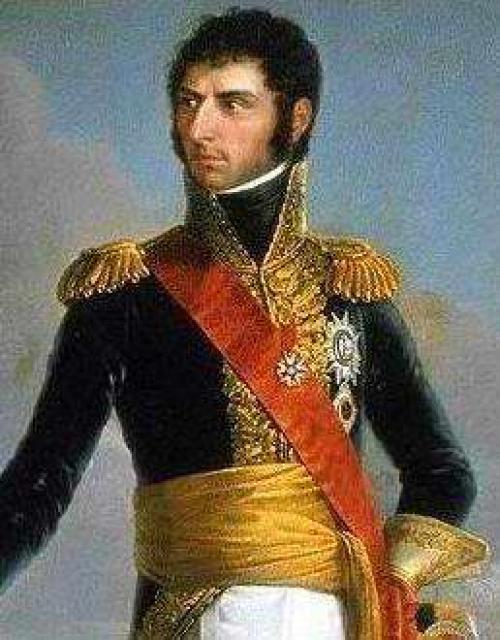
Jean-Baptiste Jules Bernadotte, a man of extraordinary destiny, was born on January 26, 1763. He started his career as a simple sergeant with the nickname "charming legs," but eventually became one of the most renowned marshals of revolutionary France. He ended his life on the throne of one of the European monarchies, under the name Charles XIV John, King of Sweden and Norway. Interestingly, the Bernadotte dynasty, which he founded, still successfully rules Sweden to this day. Bernadotte was fortunate to be born at the right time and in the right place.
Rise to Prominence in Revolutionary France
In 1790, when all restrictions on people from common backgrounds holding command positions in the French army were lifted, Jean-Baptiste, the son of a simple lawyer from the town of Pau, started rapidly advancing through the ranks. His military talents made him one of the most brilliant commanders of revolutionary France and earned him the trust of Napoleon. The sympathy between the two young men was so strong that the future emperor even gave up his former fiancee Desiree Clary to his comrade. However, their relationship soon cooled as Bernadotte disapproved of Napoleon's pursuit of absolute personal power. Although he did not openly oppose Napoleon when he overthrew the Directory, his actions spoke for themselves. Napoleon, who highly valued personal loyalty above all else, held a grudge against Bernadotte. Initially, he wanted to send him as far away as possible - as an envoy to America. However, he believed that the talented military commander could be useful to France in the upcoming wars.
Service under Napoleon and Becoming a Prince
When Napoleon crowned himself emperor, Bernadotte, as a soldier, swore allegiance to the monarch, earning himself the title of marshal. A couple of years later, the emperor appointed Jean-Baptiste as the prince of the Italian province of Ponte-Corvo. While continuing to participate in the military actions of the Napoleonic army, Bernadotte made a perhaps the most significant decision in his life - he treated the officers of a captured Swedish corps very gallantly near the German city of Lubeck. These actions brought Bernadotte great fame and sympathy in the Scandinavian country. When the Swedish Council of State faced the question of choosing an heir to the throne, as King Charles XIII had no children, a courier was sent to Paris with a request for Bernadotte to become the crown prince of Sweden. However, there was also a more mercantile motive behind this unexpected decision - the Swedes, still hoping for the return of the Baltic territories taken from them by Peter the Great, reasonably believed that they could achieve this goal faster with the help of the Napoleonic army. As for the territories, they miscalculated, but in choosing a monarch, they succeeded - Jean-Baptiste, who converted to Lutheranism and took the name Charles XIV John, became one of the most respected and revered Swedish kings. He always prioritized the interests of his new homeland in his state activities.
Anecdote about the King
To conclude, there is a historical anecdote about our protagonist. It is said that Bernadotte, a former soldier of the revolution who became a king, allegedly never removed his undershirt in the presence of others, even when bathing. After his death, when the undershirt was finally removed, a tattoo was found on his chest that read: "Death to kings!"