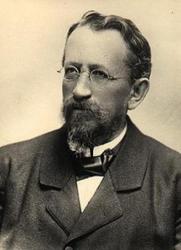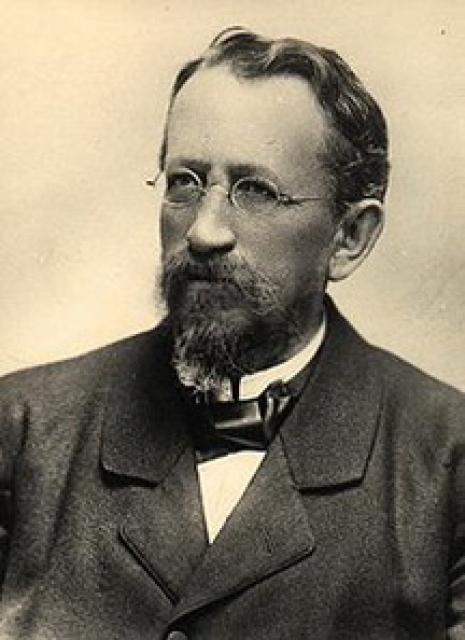
Jan Gebauer
Jan Gebauer was a Czech linguist and literary historian whose meticulous study of language helped establish modern Czech philology. His historical grammar of Czech became a foundational work, and his research into medieval texts placed scholarship at the center of a fierce national debate over the authenticity of famous manuscripts.
Early Life and Education
Gebauer was born on October 8, 1838, in Úbislavice, in what is now the Czech Republic. After attending school in Jičín, he studied in Prague, first in theology and then at the Faculty of Philosophy, where he focused on Slavic, classical, and German philology. He earned his doctorate in 1872 and began teaching Czech at the university the following year.
Building Czech Philology
After several years teaching in Pardubice and Prague schools, Gebauer joined Prague’s university as a specialist in Czech language and literature. His appointment helped restore a dedicated university chair for Czech studies. He became a full professor in 1881 and trained generations of students, while also directing the university’s Slavic Philology seminar.
Gebauer approached language through close examination of evidence and historical change. His multi-volume Historical Grammar of the Czech Language, published in installments from the 1890s, systematically traced Czech sounds and forms. He also began compiling an Old Czech Dictionary, drawing on a wide collection of excerpts from historical texts. The dictionary remained unfinished at his death, but the materials gathered by Gebauer and his collaborators provided a lasting resource for scholars.
The Manuscript Controversy
A defining episode in Gebauer’s career concerned the Dvůr Králové and Zelená Hora manuscripts, texts celebrated by many as ancient evidence of Czech literary greatness. Gebauer initially accepted their authenticity, but his linguistic analysis and further study led him to call for rigorous investigation. He concluded that the manuscripts were forgeries, challenging a belief closely tied to Czech national pride.
The dispute became a public controversy that stretched well beyond academic circles. Gebauer faced personal attacks and lost some former allies, but he held to the principle that patriotic feeling could not replace examination of evidence. The debate helped strengthen the place of critical methods in Czech scholarship.
Editor and Legacy
In 1874, Gebauer helped found the journal Listy filologické and guided it for decades into a respected outlet for philological research. His scholarship, teaching, and editorial work made him one of the most influential figures in Czech language studies. He also served as dean of the Faculty of Philosophy and rector of the Czech university in Prague.
Gebauer died in Prague on May 25, 1907. His unfinished dictionary and final volume of historical grammar were completed or published after his death. His enduring contribution was to give the study of Czech language and literature a systematic scholarly foundation, grounded in texts, historical evidence, and careful linguistic analysis.