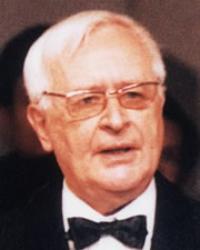
Janos Harmatta
 Hungary
- Early Life and Education
- Academic Career
- Research Interests
- Iranian Studies
- Herodotus
- Establishing Hungarian Iranology
- Honors and Awards
- Legacy
Early Life and Education
János Harmatta was a Hungarian linguist born in 1917. He graduated from university in 1940 and served as an artilleryman in the army before being taken as a prisoner of war. After the war, he completed his doctoral dissertation in 1947.
Academic Career
In 1952, after the departure of Oswald Szemerényi, Harmatta became a professor in the Department of Indo-European Linguistics at the University of Budapest. He held this position until his retirement.
Research Interests
Harmatta's research interests were broad, encompassing philology, archaeology, and numismatics. His primary focus was on Iranian languages and the Indo-Iranian language family.
Iranian Studies
Harmatta was renowned for his groundbreaking work on deciphering Parthian ostraca and Dura Europos papyri. He also deciphered a significant Bactrian inscription, making him the first to achieve such a feat.
Herodotus
Harmatta was also an expert on the writings of Herodotus. His monograph on Herodotus' accounts of the Scythians provided valuable insights into the ancient world.
Establishing Hungarian Iranology
Harmatta played a pivotal role in establishing a Hungarian school of Iranology. His contributions to the field were recognized by Manfred Mayrhofer, president of the Austrian Academy of Sciences, who described Harmatta as a "one-man faculty."
Honors and Awards
In 1970, Harmatta was elected a member of the Department of Linguistics and Literature of the Hungarian Academy of Sciences. From 1973 to 1986, he served as its vice-president. He also received the Herder Prize for his outstanding contributions to the field of linguistics.
Legacy
János Harmatta passed away in 2004 at the age of 87. He left behind a legacy as one of the most influential linguists of the 20th century. His work on Iranian languages, Herodotus, and the establishment of Hungarian Iranology continue to inspire scholars to this day.