Jarl Birger
 Sweden
Biography of Jarl Birger
Jarl Birger was a ruler of Sweden from the Folkung dynasty, serving as the Jarl of Sweden from 1248 until his death. He is also known as the "King without a name" in history. Birger was the founder of Stockholm and belonged to the influential Folkung family. He was the fourth son of Magnus Minnesköld and was born and raised in the ancestral estate of Bielbo.
In 1237, Birger married Ingeborg, the sister of King Eric the Lisp and a distant relative of Alexander Nevsky. Although chronicles indicate the "honorable" nature of their marriage, it's important to consider that Birger's cousin, Ulf Fase, had already been the Jarl of Sweden for about 15 years, and the sickly king had no heirs. Claims of Birger's participation in the Battle of the Neva in 1240 are solely based on the "Magnus Manuscript" - the will of Swedish King Magnus Eriksson (1316-1374), and the authenticity of this document is highly doubtful.
After Ulf Fase's death in 1248, Birger, by defeating his rivals, became the Jarl of Sweden and led an army on a conquest in Finland. However, he had to abandon the campaign upon receiving news of the king's death in 1250. The Swedish nobility opposed Birger's ascent to the throne, but he managed to place his eldest son, Valdemar, who was only eleven years old at the time, on the throne. Birger himself became the regent. In 1251, a rebellion led by his close relatives broke out against him. As a result, the rebel army was defeated, and Philipp Knutsson (son of King Knut the Long) and Knut Magnusson (grandson of Jarl Knut Birgersson and King Knut Eriksson) were executed, while Ulf Fase's son, Junker Karl, was exiled from the country.
Having dealt with his rivals, Birger implemented policies aimed at strengthening the state and social stability. He married his son Valdemar to the daughter of the Danish king and married his daughters off to representatives of ruling houses in Norway and North German principalities. He also signed trade agreements with Lübeck, Hamburg, and England. In Finland, he founded the fortress of Tavastehus, and he fortified Stockholm, which became the country's capital.
Birger is also known as a legislator. He prohibited the use of torture with red-hot irons, a common practice since the time of the Vikings. He recognized the right of daughters to inherit at least half of their brother's inheritance and encouraged the construction of churches as centers of culture and literacy. The support of the church, along with dynastic ties to neighboring countries, allowed the dynasty he founded to rule in Sweden and Norway until the mid-14th century.
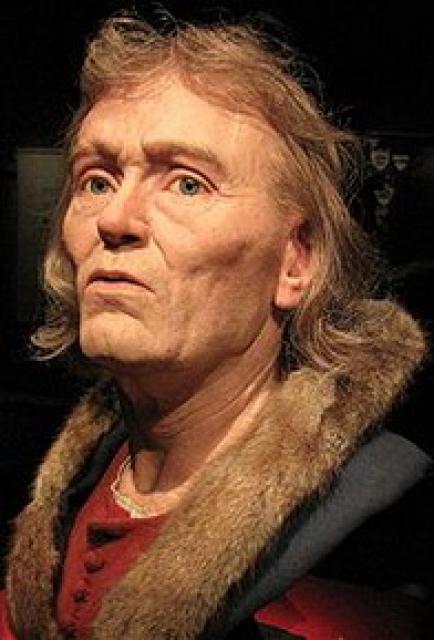
Birger Magnusson died in Jälbolung in 1266. His grave was excavated in 2002, and the analysis of his remains allowed for the reconstruction of his probable appearance. It was determined that he was around fifty years old at the time of his death. Traces of a severe injury were found near his right eye socket, which aligns with the chronicle's description of a clash on the battlefield between Alexander Nevsky and Birger: "he struck the king's face with his sharp spear." There is a square and a monument dedicated to Jarl Birger in Stockholm.