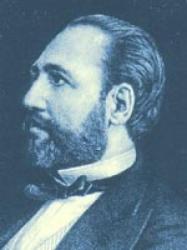
Jean-Baptiste Cardon
 France
- Jean-Baptiste Cardon: French Harpist and Composer in Russian Service
- Escape to Russia
- Compositions and Arrangements
- Final Days and Legal Disputes
Jean-Baptiste Cardon: French Harpist and Composer in Russian Service
Early Life and Parisian CareerJean-Baptiste Cardon was born into a musical family in France. His father, Jean Guillien Cardon, was a violinist and composer, and his brother, Louis Stanislas Cardon, was also a violinist and composer. From 1780 onwards, Cardon established himself as a virtuoso harpist in Paris, initially as the court musician to the Countess d'Artois, to whom he dedicated his four sonatas for harp, Op. 1. In 1785, he embarked on a concert tour to London.
Escape to Russia
With the outbreak of the French Revolution in 1790, Cardon left France and traveled to Russia, where he spent the next 12 years as a court harpist and music teacher. He collaborated with leading Western performers in Russia, including Ernest Vanguura, Anton Ferdinand Titz, and Johann Joseph Beer.
Compositions and Arrangements
In addition to his works for solo harp and with accompaniment, such as the Two Concerto Symphonies for Harp and String Quartet, Op. 18 (1787), Cardon created arrangements of popular light arias for harp accompaniment. These arrangements were partly published in "Journal of Italian and Other Ariettes with Harp Accompaniment by J.-B. Cardon" (St. Petersburg, 1797).
Final Days and Legal Disputes
In 1802, Cardon briefly returned to Paris for personal reasons. He subsequently traveled back to Russia but passed away shortly after his arrival. The subsequent legal battle over his inheritance between his surviving brothers and his second wife, whose marriage in Russia was not recognized as valid by French law, became a notable legal precedent.