Jean-Baptiste Dubos
 France
- Biography of Jean-Baptiste Du Bos
- Aesthetic Theories and Contribution
- Controversy and Historical Studies
- The Legacy and Modernization of the Past
Biography of Jean-Baptiste Du Bos
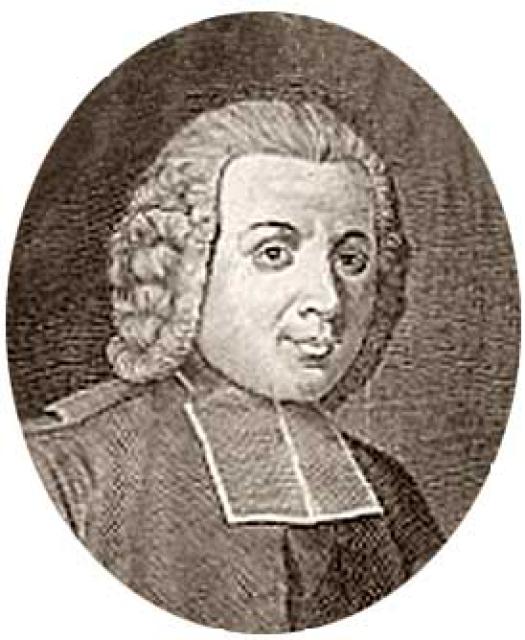
Jean-Baptiste Du Bos was a French abbot, aesthetician, historian, diplomat, and member of the French Academy (1720). He is best known for his work "Critical Reflections on Poetry and Painting" (Réfléxions critiques sur la poésie et la peinture, 1719), which became an important aesthetic treatise that influenced Gotthold Ephraim Lessing.
Aesthetic Theories and Contribution
In his work, Du Bos challenged the rigid adherence to rules that characterized French classicism, advocating instead for the primacy of emotions, passions, and innate genius in art. He positioned himself against the Cartesian, deductive spirit that dominated thinking at the time, drawing inspiration from the empirical-inductive method of natural sciences and the sensualist philosophy of the English. Du Bos's concept of genius, as presented in his work, became a turning point in the history of thought, emphasizing the inexhaustible and unpredictable nature of artistic genius.
Furthermore, Du Bos's theory of climate played a significant role in his explanation of the rise and decline of cultures. According to him, the existence of periods rich or poor in genius can be attributed to physical causes such as changing climate, air quality, and soil properties. This naturalistic approach to the study of cultural development positioned Du Bos as a precursor to later positivism.
Controversy and Historical Studies
In 1734, Du Bos engaged in a dispute with Count Buléonville, during which he formulated the concept of the so-called "romaniacs." He argued against the belief that the Franks conquered Gaul, instead asserting that the Gauls themselves invited the Franks, resulting in a peaceful assimilation of the Germanic tribes by the Gallo-Romans.
Du Bos's historical research was conducted with a more effective scientific methodology compared to Buléonville. While his investigations of the events leading to the establishment of the Frankish monarchy appeared objective and convincing, Du Bos's preconceived tendencies influenced his interpretations as much as Buléonville's. His extensive knowledge sometimes had to be supplemented with imagination when sources were lacking.
The Legacy and Modernization of the Past
Du Bos sought to refute Buléonville's thesis on the seigneurial rights of the Frankish conquerors, arguing instead that these despotic rights and hereditary jurisdiction were the result of usurpation by tyrannical rulers in the 9th and 10th centuries. He aimed to prove that there was a definite legal continuity between the Roman Empire and the Frankish kings, suggesting that the latter acquired dominion over Gaul not as conquerors but as "officiers de l’Empire" and ultimately received formal transfer of rights from Justinian. Consequently, the contemporary French kings were considered legitimate heirs of Augustus and Tiberius, whom even Jesus Christ recognized as rightful sovereigns.
Du Bos's work celebrated the inseparable nature of state power bequeathed by Roman emperors to the Frankish kings. He had an irresistible inclination for the internal modernization of the past. In Du Bos's interpretation, Gaul during the late Roman era resembled contemporary France - a highly cultured country that had been shaken by civil wars and misrule, only to find its "protectors" in the Frankish kings.