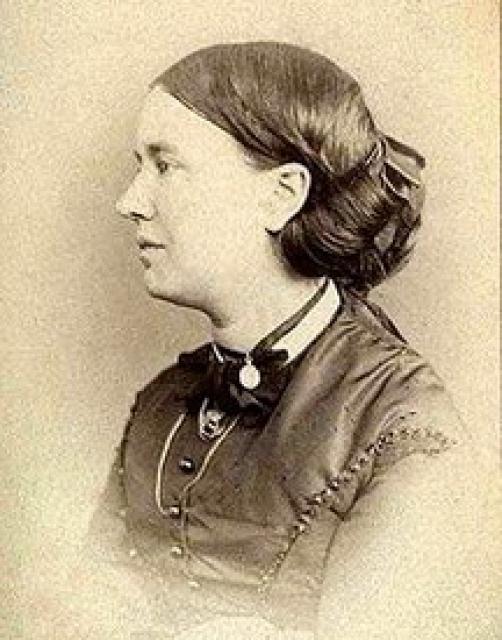
Jean Ingelow
 Great Britain
- Jean Ingelow: A Legacy in English Literature
- Prolific Poet and Novelist
- Popularity and Literary Legacy
- Later Years and Decline
Jean Ingelow: A Legacy in English Literature
Early Literary PursuitsJean Ingelow, an acclaimed English writer, began her literary journey at a tender age, publishing poetry and tales in periodicals under the pseudonym Orris. Her debut collection, "A Rhyming Chronicle of Incidents and Feelings," was released in 1850, garnering praise from renowned poet Alfred Tennyson.
Prolific Poet and Novelist
In 1860, Ingelow published "Tales of Orris," followed by the poetry volume "Poems" in 1863, which went through 23 editions over two decades. Her subsequent poetry collections include "Home Thoughts and Home Scenes and Stories Told to a Child" (1865), "A Story of Doom and Other Poems" (1867), "Mopsa the Fairy" (1869), "Little Wonder-Horn" (1872), and "Poems" (1885). Ingelow's notable novels encompass "Off the Skelligs" (1872), "Fated to be Free" (1875), "Don-Juan" (1876), and "Sarah de Berenger" (1881).
Popularity and Literary Legacy
Ingelow's writings resonated deeply with readers, particularly with children. Many of her poems gained widespread popularity as songs in both England and the United States. However, her style's exaggerated lyricism, coupled with excessive use of synonyms and outdated vocabulary, gradually eroded her reputation. Her works became the subject of parodies, notably by "the king of parody," Charles Calverley.
Later Years and Decline
As Ingelow's popularity waned, she spent her final years in Kensington, her literary presence fading into the shadows. Despite her initial success, her artificial language and repetitive themes ultimately diminished the longevity of her literary legacy. Nonetheless, Jean Ingelow's contribution to English literature remains an integral part of the Victorian literary landscape.