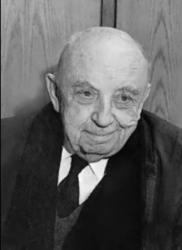
Johann Gottlieb Fichte
 Germany
Johann Gottlieb Fichte - Biography
Johann Gottlieb Fichte was a German philosopher and the founder of "absolute idealism". He was born on May 19, 1762, in the village of Rammenau, Saxony, to a peasant family. Fichte's life took a turn when he gained a patron in the form of Baron von Miltitz. He studied at the University of Jena (1780) and the University of Leipzig (1781-1784), and for the following ten years, he moved from place to place, earning a living by giving lessons.
In 1790, Fichte began intensely studying the works of Immanuel Kant, which influenced his entire philosophical career. Fichte gained Kant's approval by presenting an essay he wrote in a month, titled "An Attempt at a Critique of All Revelation" (Versuch einer Kritik aller Offenbarung). This work, published without attribution in 1792 and initially attributed to Kant himself, brought Fichte recognition as a philosopher. In 1793, he was invited to become a professor of philosophy at the University of Jena, a position he took in the spring of 1794.
Fichte taught in Jena for five years but was forced to leave the university in 1799 after being accused of "atheism" for claiming that God is not a personal being but a moral order. It is possible that local church officials did not appreciate that he held his lectures on Sundays. He then lived in Berlin (until 1806), except for one semester when he was a professor at the University of Erlangen (1805). When the Prussian government had to move to Königsberg in 1806 due to their defeat in the war against Napoleon, Fichte followed and taught at the University of Königsberg until 1807. In 1810, he was appointed the first rector of the newly established University of Berlin and held this position until 1812.
Another reason for gratitude towards Fichte was his series of lectures in Berlin (1807-1808) shortly after the humiliating defeat at Jena. These lectures, titled "Addresses to the German Nation" (Reden an die deutsche Nation, 1808), called on the German people to resist the French occupiers. When the liberation war began in 1813, he was recognized as one of the intellectual leaders of the German resistance to Napoleon's regime. His wife, who had volunteered as a nurse, contracted typhoid fever, which she soon recovered from but passed the infection on to Fichte. He died in Berlin on January 27, 1814.
Some of Fichte's most famous works include "On the Vocation of the Scholar" (Einige Vorlesungen über die Bestimmung des Gelehrten, 1794), "The Vocation of Man" (Die Bestimmung des Menschen, 1800), and "A Clear Presentation to the Greater Public about the True Essence of the Latest Philosophy. An Attempt to Force the Readers to Understand" (Sonnerklare Bericht an das größere Publikum über das eigentliche Wesen der neuesten Philosophie. Ein Versuch, die Leser zum Verstehen zu zwingen, 1801).
Fichte's theory is based on a philosophical doctrine he called "Wissenschaftslehre" or "Science of Knowledge". His main work, "The Foundation of the Entire Science of Knowledge" (Grundlage der gesammten Wissenschaftslehre), first published in 1794 and revised nine times throughout his life, had a profound influence on his thinking. He was greatly influenced by the "ethical activism" of Rousseau and Kant, emphasizing the supreme role of the will. According to Fichte, the fundamental philosophical reality is the ethical (or "practical") creative activity of the individual, which he referred to as the "Ich" (I, ego) in his terminology. However, Fichte's concept of the ego has little in common with traditional views of self-identity or ordinary egoism. It is based on the idea of the autonomous status of morality in the natural world.
According to Fichte, every person experiences themselves living in two realms: their consciousness includes both their self (I) and what is not themselves (Nicht-Ich, non-I). To understand the non-Ich, one must first understand oneself. The ultimate reality, therefore, is the self, on which everything else depends. But this self is far from the classical concept of a "soul". Alongside Descartes and Kant, Fichte believed that this primary datum is not a fact (Thatsache) but an activity (Thathandlung) of consciousness. However, what is the object of consciousness? It is not the existing, external, natural world, as we naively assume; rather, we are dealing with consciousness of ourselves. According to Kant, "perceptions without concepts are blind," and reason establishes causal relationships among simple series of external events. The reflective image of being in consciousness (the view of naive realism) is inexplicable, according to Fichte, if we make this being the basis for explaining consciousness. Therefore, being must depend on consciousness, not vice versa. "Science of Knowledge" should demonstrate that all consciousness directed towards objects, towards the "other," is rooted in the original relation of consciousness to itself. Thus, experience is the product of consciousness, not consciousness the product of experience.
However, Fichte's main motivation is not the understanding of the natural world but the comprehension of morality. There is no absolute nature that transcends will; otherwise, freedom and rationality, these fundamental aspects of consciousness, would be impossible. "The feeling of freedom is rationally confirmed by the reality of its object." The self must expand to the non-Ich to become a reality. This is how the natural world and objects emerge, through which the fundamental spiritual power then breaks through. However, this external world is not an illusion or a construction of desires; on the contrary, it is a very real world that usually resists attempts to rationalize it and make it "moral". Consciousness only knows itself and its activity, but its activity, so to speak, "goes out of control." History, which Fichte calls "divine pedagogy," arises from this rift between the I and the non-Ich to overcome necessity through freedom and nature through morality.
Kant, whose motives likely also lay in the moral sphere, could skillfully juggle concepts and keep the spheres of the real and the rational within one system. He remained a relatively serene thinker of the Enlightenment, referring to his system as "critical idealism" and acknowledging the role of the external world and consciousness. However, Fichte, witnessing the collapse of the ideals of the French Revolution, could no longer tolerate an irrational reality. He extended reason and morality to all existence, becoming the founder of "absolute idealism". Some have classified Fichte's political theories as anticipating nationalism and fascism in the 20th century. However, it is essential to consider that his "nationalist" speeches were made during a period of resistance against foreign invaders, speaking on behalf of a nation that did not yet exist. In one of his early works, "Contribution to Correcting the Public's Judgment of the French Revolution" (Beitrag zur Berichtigung der Urteile des Publikums über die französische Revolution, 1793), Fichte justified the revolution, claiming that the right to freedom is inseparable from a person's existence as a rational being. Throughout his life, he remained a passionate defender of the ideals of the French Revolution.