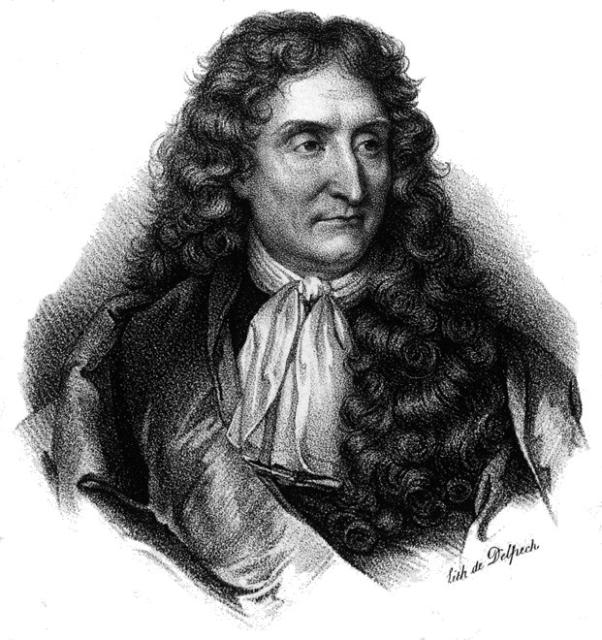
Jean La Fontaine
 France
- A Journey of Wit and Realism: The Life of Jean de La Fontaine
- Literary Ambitions and a Troubled Marriage
- Patronage and Literary Success
- The Birth of the "Fables"
- Membership in the Académie Française
- Legacy and Impact
A Journey of Wit and Realism: The Life of Jean de La Fontaine
Early Life and EducationJean de La Fontaine, renowned French author and fabulist, was born into a rebellious spirit. Despite his father's royal office, La Fontaine's path led him to the Oratorian seminary in Paris, where he was sent to study law.
Literary Ambitions and a Troubled Marriage
Returning to his family estate in Champagne, La Fontaine married the young Marie Héricart. However, the union proved unhappy, and he abandoned his familial responsibilities in 1647 for a literary destiny in Paris.
Patronage and Literary Success
In 1657, La Fontaine found a patron in Minister Fouquet, to whom he dedicated numerous poems, including the celebrated "Elgie aux nymphes de Vaux" (1662). In 1667, the Duchess of Bouillon became his patroness. Despite his reputation for free-spirited poems, La Fontaine released his first collection, "Les nouvelles en vers" (1665), followed by "Contes et nouvelles en vers" (1664-1671) and "Les amours de Psyche et de Cupidon" (1669).
The Birth of the "Fables"
From 1668 onward, La Fontaine devoted himself to writing his iconic "Fables." Inspired by Aesop, Phaedrus, and Nevius, his tales often subverted traditional moralistic teachings. This "immoralism" drew criticism from Jean-Jacques Rousseau a century later.
Membership in the Académie Française
Enjoying the patronage of the Duchess of Bouillon, La Fontaine published six books of "Fables" by 1668. His literary circle included famous writers such as Boileau-Despréaux, Madame de Sévigné, Racine, and Molière. In 1680, he completed the twelve-book edition of the "Fables." Three years later, he was elected to the prestigious Académie Française.
Legacy and Impact
La Fontaine's shorter poems and early works may have faded into obscurity, but his "Fables" remain a testament to his wit, mastery of language, and keen observations of the human condition. The use of archaic language, rhythmic perfection, and a realistic worldview make them timeless masterpieces.