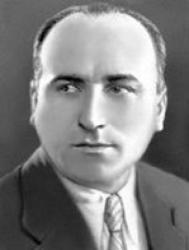
Jean-Louis Barrault
 France
Biography of Jean Genet
Jean Genet was a French writer, novelist, playwright, and essayist, born on December 19, 1910, in Paris. He had a troubled childhood, being abandoned by his mother at a young age. He was placed under the care of a tradesman, but his criminal tendencies soon took hold. From the age of ten, he began stealing money from his foster parents.
His delinquency continued as he ran away from home multiple times and was sent to various families and charitable organizations. However, he could not stay in one place for long, often stealing from his benefactors, leading to his rejection. At the age of sixteen, Genet was first incarcerated and spent three months in prison. This was followed by another arrest and a two-and-a-half-year sentence in a reformatory.
It was during his time in prison that Genet turned to literature, writing his first novel, "Our Lady of the Flowers," and his poem, "Death." Jean Cocteau, with whom Genet became acquainted, recognized his literary talent and helped him publish his works. Later, esteemed writers such as Jean-Paul Sartre, Louis-Ferdinand Celine, Vladimir Nabokov, William S. Burroughs, and Françoise Sagan praised Genet's writing.
Throughout his life, Genet led a nomadic existence, constantly moving between different countries such as Beirut, Morocco, Belgrade, Palermo, Vienna, Brno, Nazi Germany, and eventually returning to Paris. He spent a significant portion of his life in prison for various offenses including vagrancy, visa violations, forgery, desertion, and theft.
Despite his dislike for the theater, Genet attached great importance to the stage interpretations of his plays. He would constantly revisit his works, making revisions, and providing detailed comments and instructions to directors. His plays, such as "The Maids," "The Balcony," "The Blacks," and "The Screens," were known for their unique blend of naturalism, theatricality, and poetic language.
Genet's theatrical concept revolved around the idea of returning theater to its sacred and ritualistic origins. He even suggested that theaters be located close to cemeteries, where the shadow of death would protect and preserve the art form. His plays often featured marginalized groups such as the Black Panthers, the Red Brigades, Palestinians, and immigrants from North Africa.
In addition to his literary work, Genet became politically active in support of ultra-leftist movements in the late 1960s. He wrote numerous articles, political appeals, pamphlets, and protest letters. His book "Prisoner of Love," published posthumously, detailed his experiences and interactions with the Black Panthers and Palestinians.
Jean Genet passed away on April 15, 1986, in a Paris hotel. He was buried according to his wishes on an old Spanish cemetery in Morocco, with a prison on one side and a brothel on the other. Despite the controversy surrounding his life and work, Genet's influence and fascination continue to captivate writers, psychiatrists, and philosophers. Several biographies, including those by Jean-Paul Sartre and Jacques Derrida, have been written to explore his complex personality and literary contributions.