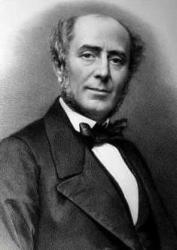
Jean-Nicolas Bouilly
 France
- Early Life and Career
- Political and Administrative Roles
- Literary Contributions
- Fairy Tales and Children's Literature
- Later Years and Legacy
Early Life and Career
A French writer, playwright, and librettist, Jean-Nicolas Bouilly was born into a bourgeois family in Coulommiers, France in 1763. After completing his law studies at the University of Orléans, he became a member of the Paris Parliament and held this position until the parliament was relocated to Troyes in 1787. Supported by the renowned orator Mirabeau, Bouilly decided to pursue literature.
Political and Administrative Roles
During the French Revolution, Bouilly held various administrative positions in Tours and later served on the commission responsible for establishing a new educational curriculum. However, after opposing police interference in the commission's work, he retired and dedicated himself to writing librettos for operas by renowned composers such as Grétry, Cherubini, and Méhul.
Literary Contributions
Bouilly's literary output spanned a wide range of genres. His dramas often featured historical figures as their subjects, including Peter the Great, Jean-Jacques Rousseau, and the Abbé de L'Epée. In 1809, he began publishing collections of fairy tales, beginning with "Conseils à ma fille" (1811). His most famous play, "Léonore, ou L'Amour conjugal," was written in 1794 and provided the basis for Beethoven's opera "Fidelio."
Fairy Tales and Children's Literature
Bouilly's fairy tales aimed to educate and entertain children. His two-volume work, "Contes offerts aux enfants de France" (1824-1825), and his later collection, "Les Adieux du vieux conteur" (1835), showcased his prowess in the genre. His fairy tales remain popular to this day, instilling valuable lessons while captivating young minds.
Later Years and Legacy
In his later years, Bouilly published a collection of memoirs, recounting his experiences and observations. He passed away in 1842, leaving behind a legacy of literary works that continue to be enjoyed by readers around the world.