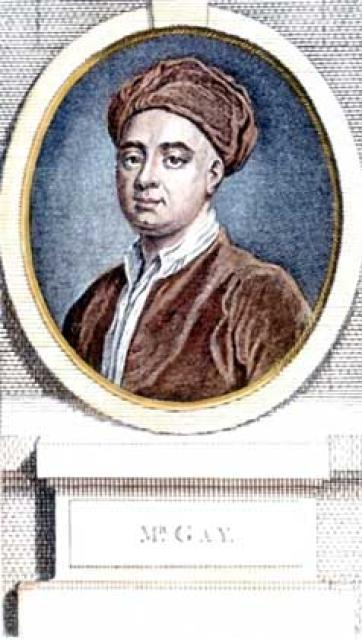
John Gay
 Great Britain
Biography of John Gay
John Gay was an English poet and playwright, born and baptized in Barnstaple on September 16, 1685. After completing his education and a brief apprenticeship with a silk and velvet merchant in London, Gay turned to writing. His work "The Present State of Wit" (1711), in which he praised the literary figures published in periodicals, along with a series of complimentary poems, earned him enduring friendships with Alexander Pope, Jonathan Swift, and other esteemed writers.
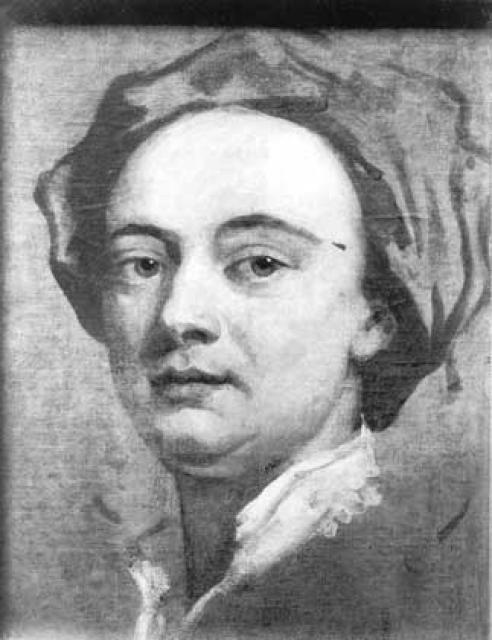
From 1712 to 1714, Gay served as secretary to the Duchess of Monmouth and Lord Clarendon. His poem "Wine" (1708), written in blank verse, and his burlesque poem "The Fan" (1713) showcased his exceptional abilities as an imitator and skilled poet. In "Rural Sports" (1713), which inspired Pope's "Pastorals" and "Windsor Forest," as well as "The Shepherd's Week" (1714), Gay expressed genuine admiration for nature and sympathy for ordinary people.
"Trivia, or the Art of Walking the Streets of London" (1716) was a lengthy poetic companion to William Hogarth's engravings, portraying life in London during the reign of George I. Gay earned some income from his collection of poems, "Poems on Several Occasions" (1720), but soon lost his money in failed business ventures. In 1722, he found a modest position and in 1725 became a tutor and mentor to the Duke of Cumberland.
His collection of moralistic fables written in tetrameter, "Fables" (1727; vol. 2 – 1738), was well-received by readers. Gay's early plays, such as "The Mohocks" (1712), "The Wife of Bath" (1713), "What D'Ye Call It" (1715), "Three Hours after Marriage" (1717, written in collaboration with Pope and John Arbuthnot), "Dione" (1720), and "The Captives" (1724), either received indifferent receptions or went unnoticed.
However, the publication of the socio-political satire "The Beggar's Opera" (1728) greatly enhanced Gay's fame and fortune. In this brilliant work, Gay drew upon the traditional parallel between the upper and lower classes, the nobility and criminals. "The Beggar's Opera" gave birth to the genre of "ballad opera," where comedic prose dialogue is interspersed with ballad-like arias. Gay portrayed the frivolity of the 18th century in a way that entertained both contemporary and modern audiences.
"The Beggar's Opera" was repeatedly revived and adapted, filmed, and served as a model for later imitations. Among the most notable adaptations are "Beggar's Holiday" (1947) by Duke Ellington and John La Touche, and "The Threepenny Opera" (1928) by Bertolt Brecht, with music by Kurt Weill.
Although his sequel to the opera, "Polly" (1729), was initially banned, it still managed to generate significant profits. In his final years, Gay spent time in the company of his patrons, the Duke and Duchess of Queensberry. He passed away in London on December 4, 1732.
Posthumously, his works "Acis and Galatea" (1732, music by George Frideric Handel), "Achilles" (1733), "The Distressed Wife" (1734), and "The Rehearsal at Goatham" (1754) were staged.


